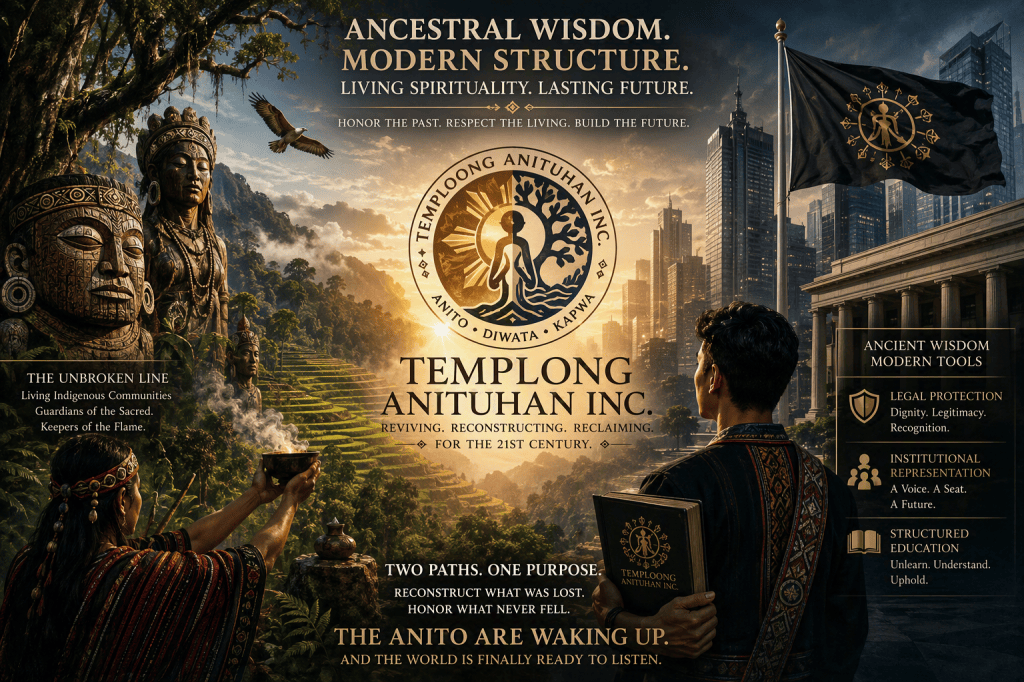
For centuries, the vibrant heartbeat of pre-colonial Philippine spirituality was systematically silenced. Colonial forces demonized our ancestors’ relationships with the Anito (spirits and ancestors) and the Diwata (nature deities), replacing local cosmologies with Western, Abrahamic structures. The rich traditions of the Catalonan and the Babaylan were pushed to the margins of history, leaving a deep cultural wound.
But the old gods never truly left. They simply waited in the soil, the trees, and the collective memory of the Filipino people.
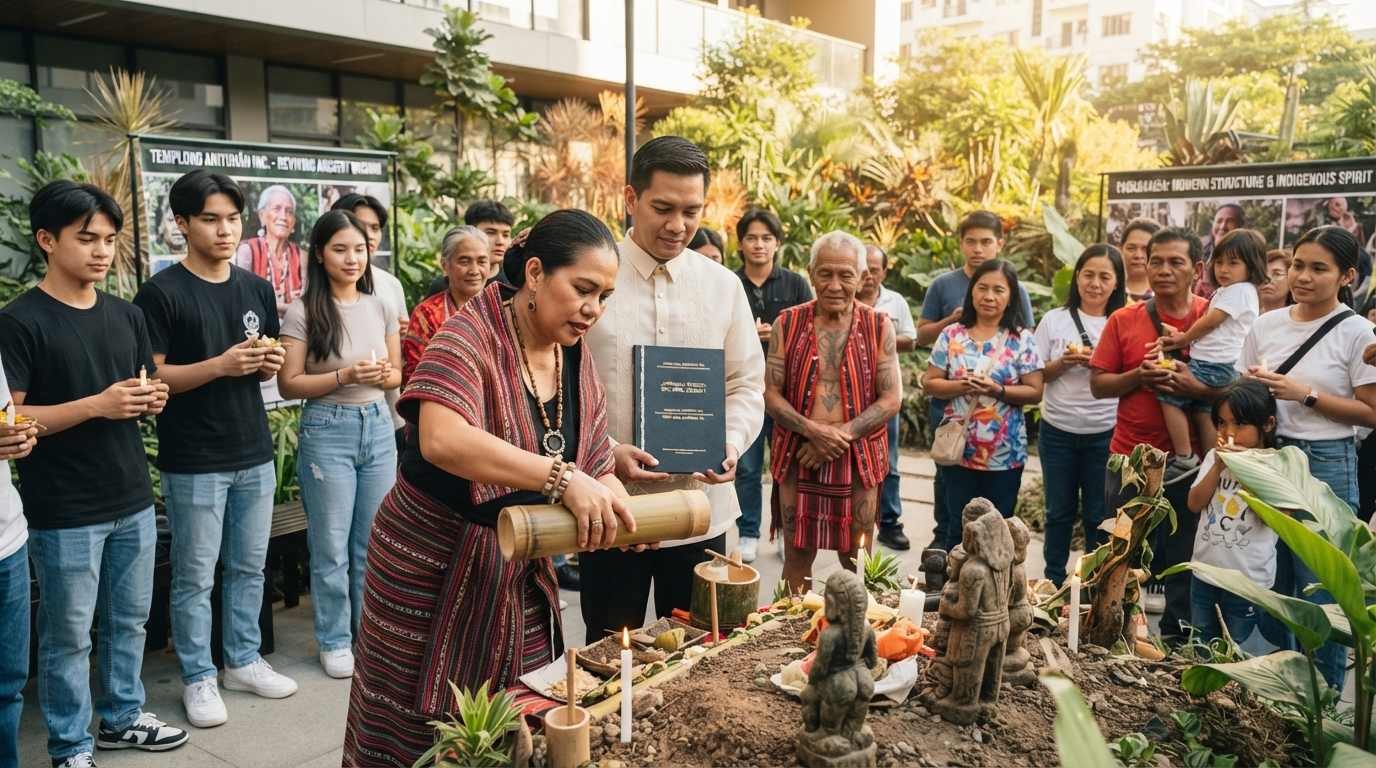
Today, a powerful resurgence is underway. Leading the charge in the urbanized, modern landscape is Templong Anituhan Inc., an SEC-registered religious organization dedicated to preserving, reviving, and reconstructing pre-colonial indigenous spirituality for the 21st century.
Ancient Wisdom + Modern Structure = Sustainable Cultural Survival
Playing by Modern Rules to Reclaim Ancient Spaces
For many contemporary Filipinos, especially those in urban centers or the diaspora, returning to the “Old Religion” feels like navigating a path without a map. Templong Anituhan addresses this by building an institutional bridge.
By utilizing formal frameworks—such as SEC registration, organized ecclesiastical training, and degree programs that progress toward a doctorate level—the organization is doing something revolutionary: they are using the exact tools of modern bureaucracy to demand parity with dominant global religions.
This structured approach serves several critical functions:
- Legal Protection: It shields practitioners from historical stigmas of “witchcraft” or illegality.
- Institutional Representation: It gives the Old Religion a formal voice in modern interfaith dialogues and government cultural platforms.
- Structured Education: It provides a safe, curated curriculum for modern Filipinos to unlearn colonial conditioning and study ancestral philosophy systematically.
By adopting terms like “ecclesiastical,” Templong Anituhan masterfully flips the script, utilizing the language of the colonizer to carve out a legally protected space for the gods of the colonized.
Reminding the Classroom: Filipinos Have Our Own God
Walk into any modern elementary or high school classroom in the Philippines, and you will see the national curriculum actively accommodating religious identity. Christian values education and Madrasah programs for the Islamic faith are deeply institutionalized. Students are taught Abrahamic morality as a fundamental part of being a citizen.
But where is the Filipino soul in this equation?
By introducing professional, accredited graduate degrees—such as a Master of Divinity (MDiv), Master of Theology (ThM), or a Doctor of Divinity (DD) in Indigenous Filipino Spirituality—we can fundamentally disrupt this colonial monopoly in education.
[Abrahamic Faiths] ──> Certified Clergy ──> Approved School Curriculum[Anituhan Religion] ──> Titled Experts ──> Decolonized Classrooms
When our educational system is backed by certified academic experts holding doctorate-level credentials, the conversation changes:
- Curriculum Parity: These accredited experts can collaborate directly with the Department of Education (DepEd) to design elective tracks. Children can finally learn that long before 1521, Filipinos worshiped supreme creator deities like Bathala, Apo Namalyari, or Gugurang, and possessed highly sophisticated moral frameworks.
- A Voice of Authority: Modern Filipinos seeking spiritual guidance or answers about the Old Religion will no longer have to rely on questionable internet forums. They will have access to verified, deeply trained experts capable of standing up on national platforms to speak the truth about our heritage.
- Demolishing Stigmas: For generations, colonial biases downgraded ancestral roles into cartoonish tropes of back-alley “witchcraft” or unscientific superstition. An advanced theological degree forces mainstream media, courts, and universities to accord our tradition the exact same structural weight given to a Christian bishop or an Islamic mufti.
Honoring the Unbroken Thread: The Living Lineages
As we celebrate the historical reconstruction of pre-colonial traditions in academia, we must always bow our heads in deep reverence to those who never lost the spark in the first place.
While organizations like Templong Anituhan build paths to reconstruct what was lost in heavily colonized areas (like the lowlands of Luzon and the Visayas), communities like the Cordillera peoples of the north and the Lumad of Mindanao possess an unbroken, continuous line of indigenous spirituality.
The Mumbaki of the Ifugao terraces and the spiritual leaders of the Lumad did not need SEC registrations, academic modules, or doctorate titles to preserve their ways. They preserved them through raw resilience, blood, sweat, and an unshakeable connection to their ancestral lands.
A respectful modern practice requires acknowledging this distinction:
- Reconstruction is an academic and spiritual effort to revive traditions that were heavily disrupted by colonization.
- Preservation is the ongoing defense of living, breathing traditions that survived centuries of active systemic oppression.
Crucially, modern scholars holding these advanced theological degrees can act as a powerful administrative shield for our living tribes. They can use their systemic privilege and institutional credentials to legally defend the cultural and intellectual property of living indigenous communities against exploitation and commercialization.
A New Dawn for the Anito
Templong Anituhan Inc. represents a vital, innovative step forward in the decolonization of the Filipino psyche. By validating the Old Religion through modern educational standards, they give it the dignity it always deserved in the eyes of a westernized society.
As we look toward the future, the revival of Philippine indigenous spirituality stands on two sturdy pillars: the rigorous, strategic reconstruction of our past in modern institutions, and the profound, humble respect for the living indigenous communities who guarded the sacred fire through the darkest nights of our history.
The Anito are waking up—and they are finding a modern world finally ready to listen.


Leave a Reply