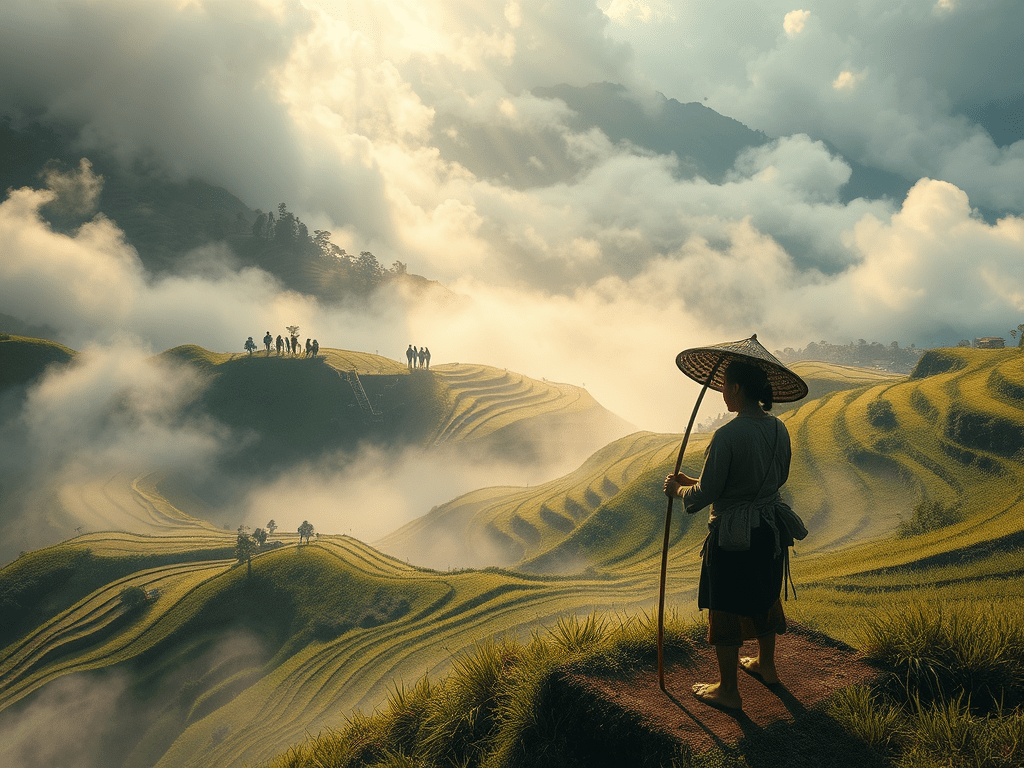

In the misty heights of the Cordillera, the Ifugao people do not merely farm; they participate in a continuous ritual of existence. At the heart of this life is Maknongan, the supreme creator and “Chief God” who is seen as the ultimate source of all blessings and the overseer of human conduct.
For a traditional Ifugao, living a “holy” or upright life is defined by the concept of Maphod—a state of goodness, health, and harmony with both the seen and unseen worlds.
The Pillar of “Maphod” (Goodness)To live under the guidance of Maknongan is to strive for Maphod. This isn’t just about private prayer; it is a public, active way of being. It includes: Maphod an kitaguwan (Honest Living): Ensuring that one’s livelihood is gained fairly and without deceit. Kiphodan (Common Good): Prioritizing the welfare of the community over individual gain, reflecting the collective nature of Ifugao society. Maphod an pangat (Good Deeds): Actively participating in the social and spiritual life of the village. Avoiding the “Paniyaw” (Taboos). A holy life is equally defined by what one avoids.
Maknongan’s guidance is codified in Paniyaw, a system of taboos that act as moral guardrails. Breaking a Paniyaw—whether through theft, adultery, or disrespecting the ancestors—is believed to trigger “Homok di Maknongan,” a withdrawal of divine favor that can lead to illness or crop failure. Following these laws is the primary way the Ifugao maintain their “salvation,” which they interpret not as a future paradise, but as kaginhawaan—a state of total well-being in the present life.
The Rituals of Connection Under Maknongan’s watchful eye, every major life event is sanctified through the Baki (sacrificial rituals) performed by the Mumbaki (priests). These rituals are the bridge between the human and the divine:Atonement: When a custom is broken, sacrifices are offered to appease the spirits and restore the balance Maknongan demands.
Thanksgiving: Grand feasts like the Uya-uy or Hagabi are not just displays of wealth but acts of gratitude for the life and resources Maknongan has provided.
Conclusion: A Life in BalanceTo live a holy life in the Ifugao way is to recognize that one is never alone. Every stone in the rice terraces and every drop of water in the muyong (sacred forest) is a gift from Maknongan that carries a responsibility. By adhering to the Ugali (customs) and maintaining a heart of Maphod, an individual ensures that they remain in the grace of the Creator, preserving a legacy of harmony that has endured for thousands of years.
 Templong Anituhan
Leave a comment