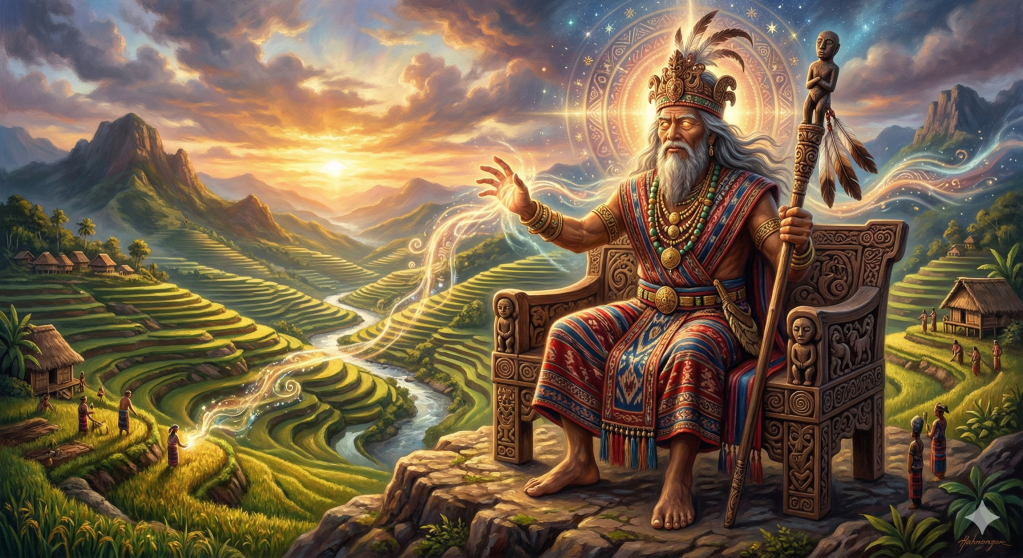
The Ifugao people of the Philippine Cordilleras are globally renowned for their engineering marvel—the Banaue Rice Terraces. However, the spiritual architecture that sustains their culture is just as breathtaking. At the very peak of the complex Ifugao pantheon sits Mahnongan (also spelled Maknongan), the supreme creator deity.
Today, as more Filipinos seek to reconnect with their pre-colonial roots, names like “Diwatang Mahnongan Apunihon” have begun surfacing in modern prayers and online spiritual communities. But who is Mahnongan historically, how did this ancient highland creator become known as “Apunihon” today, and why are modern seekers turning to this deity?
The Authentic Tradition: Who is Mahnongan?
Traditional Ifugao religion is animistic and polytheistic, possessing a staggeringly complex cosmology with over a thousand distinct deities divided into specific classes. Yet, despite this vast pantheon, Mahnongan is revered as the supreme god.
To the authentic Ifugao tradition, Mahnongan is:
- The Ultimate Creator: The deity responsible for the creation of the earth, the first humans, and the natural laws that govern the universe.
- The Giver of Life: Mahnongan is intimately tied to reproduction—both the fertility of human families and the vitality of the crops.
- The Overseer of Justice: When cosmic or earthly balances are disrupted, Mahnongan is the ultimate authority to whom the Ifugao appeal for justice, health, and restoration.
How the Ifugao Traditionally Honor Mahnongan
In ancient and traditional Ifugao culture, spirituality is not separated from daily life; it is woven into farming, hunting, and community governance. The Ifugao do not historically build massive temples. Instead, they honor Mahnongan through precise, localized rituals:
- The Mumbaki (Indigenous Priests): Prayers to Mahnongan are led by the mumbaki, highly trained ritual specialists who memorize hours of ancestral genealogies and sacred myths.
- The Baki (Sacrificial Rituals): To seek Mahnongan’s favor or ask for healing, the mumbaki perform sacrifices of chickens or pigs.
- Reading the Sacred Liver: During the baki, the priest carefully inspects the animal’s liver and gallbladder. The physical state of these organs serves as a direct message from the divine.
- The Omen Bird (Idaw): The Ifugao observe the flight and calls of the Idaw bird before planting crops, going on journeys, or making major life decisions, viewing it as a messenger of the divine will.
The Modern Evolution: The Rise of “Mahnongan Apunihon”
In recent years, a beautiful movement has emerged among contemporary Filipinos aiming to revive and celebrate indigenous spirituality. In these modern spaces, you will often see the deity referred to as “Diwatang Mahnongan Apunihon.” While Mahnongan is entirely authentic to Ifugao history, this specific title is a modern, syncretic (blended) creation meant to unite different Philippine traditions:
- “Diwatang”: Derived from Sanskrit, this word is used heavily in the lowlands and southern Philippines to mean “god” or “spirit.” Historically, the highland Ifugao do not use this word, but modern groups use it as a universal Filipino term for the divine.
- “Apu”: A pan-Philippine honorific meaning “Lord,” “Ancestor,” or “Venerated Elder.”
- “-nihon” (or -hon): A lowland linguistic suffix meaning “to treat as” or “having the quality of.”
Therefore, “Apunihon” translates to “The Venerated Lord” or “To Be Treated as Supreme Ancestor.”
Why Modern Seekers Pray to Mahnongan Apunihon
For those stepping outside the bounds of traditional Western religions, invoking Mahnongan Apunihon offers a deeply resonant spiritual path. People today are drawn to pray to this deity for several powerful reasons:
- Decolonizing Spirituality: Praying to Mahnongan Apunihon allows modern Filipinos to reclaim a sense of the divine that is indigenous to their own soil. It is a way to decolonize their faith by turning to an ancient, pre-colonial concept of the Creator rather than imported frameworks.
- Environmental Stewardship: Mahnongan is inextricably linked to agriculture, the mountains, and the natural laws of the earth. Modern eco-spirituality aligns perfectly with this. People pray to Mahnongan to ask for ecological healing, a better harvest (literal or metaphorical), and to foster a deeper, more respectful relationship with nature.
- Seeking Cosmic Balance and Justice: In traditional lore, Mahnongan oversees fairness and the balance of life. In our often chaotic modern world, practitioners pray to this deity for guidance, inner equilibrium, and justice in their personal or community lives.
- Honoring Ancestral Heritage: Even for those without direct Ifugao lineage, honoring the “Supreme Ancestor” is a way to pay homage to the ancient wisdom, resilience, and spiritual depth of the archipelago’s first peoples.
A Modern Invocation to Mahnongan Apunihon
To understand how modern practitioners connect with this ancient deity today, one can look at the syncretic prayers constructed to honor them. These invocations blend pan-Philippine reverence with traditional Ifugao imagery:
Oh, Diwatang Mahnongan Apunihon, Supreme Creator of the Earthly Terraces and the Skyworld’s Vault; Great Giver of Life, You who shape the cosmic balance and oversee the scales of justice; Lord of the Harvest and Master of the Sacred Omen, Who speaks through the flight of the Idaw and the secret language of the sacred offerings. Guardian of the Ancestral Bloodlines and Keeper of the Eternal Mountains; You who breathe vitality into the seed and weave the threads of human destiny; Great Spirit of the Angadal Heights, The High Sovereign of All Generations; Source of the Healing Breath and the Ultimate Restorer of Harmony, Hear our Prayers!
Navigating Respect: Can Non-Ifugao People Honor Mahnongan?
As these modern pan-Philippine spiritual movements grow, a vital question arises regarding cultural appreciation versus cultural appropriation: Can a non-Ifugao person respectfully honor Mahnongan?
The answer is yes, but the way you go about it depends entirely on the framework you are using:
- The Modern Framework (Mahnongan Apunihon): The groups that coined this specific title created these pan-Philippine prayers precisely so that Filipinos of various backgrounds could reconnect with the archipelago’s spiritual heritage. In this modern context, anyone who feels a spiritual calling to honor the Creator using this blended, respectful title is generally welcome to do so in their own personal prayers or altars.
- The Traditional Framework (Maknongan / Mahnongan): Authentic, ancient Ifugao religion is an ethnic religion, intrinsically tied to the land of the Cordilleras, specific bloodlines, and the community. The actual rituals (baki) and the role of the priest (mumbaki) belong strictly to the Ifugao people. It is highly inappropriate for an outsider to perform a traditional baki or claim to be a practitioner of the ancient religion without being initiated by the community.
If you are an outsider looking to incorporate this honoring into your life, the best approach is grounded in honesty and respect. Acknowledge that you are practicing a modern, adapted form of reverence rather than ancient Ifugao baki. Support indigenous rights, educate yourself on the living culture of the Cordilleran people, and focus on embodying the virtues Mahnongan represents.
Bridging the Past and Present
When modern neo-indigenous practitioners recite prayers to “Diwatang Mahnongan Apunihon,” they are not claiming this was the exact historical name used in the rice terraces centuries ago. Instead, they are taking an ancient, authentic Creator God and granting Him a formalized, pan-Philippine title of supreme respect.
Ultimately, whether addressed simply as Mahnongan by an elder mumbaki in the Cordilleras, or as Mahnongan Apunihon by a modern seeker in the city, the intent remains the same: a profound respect for the Creator, a deep honoring of the ancestors, and a shared desire to keep the spiritual heartbeat of the Philippines alive.
 Templong Anituhan
Leave a comment