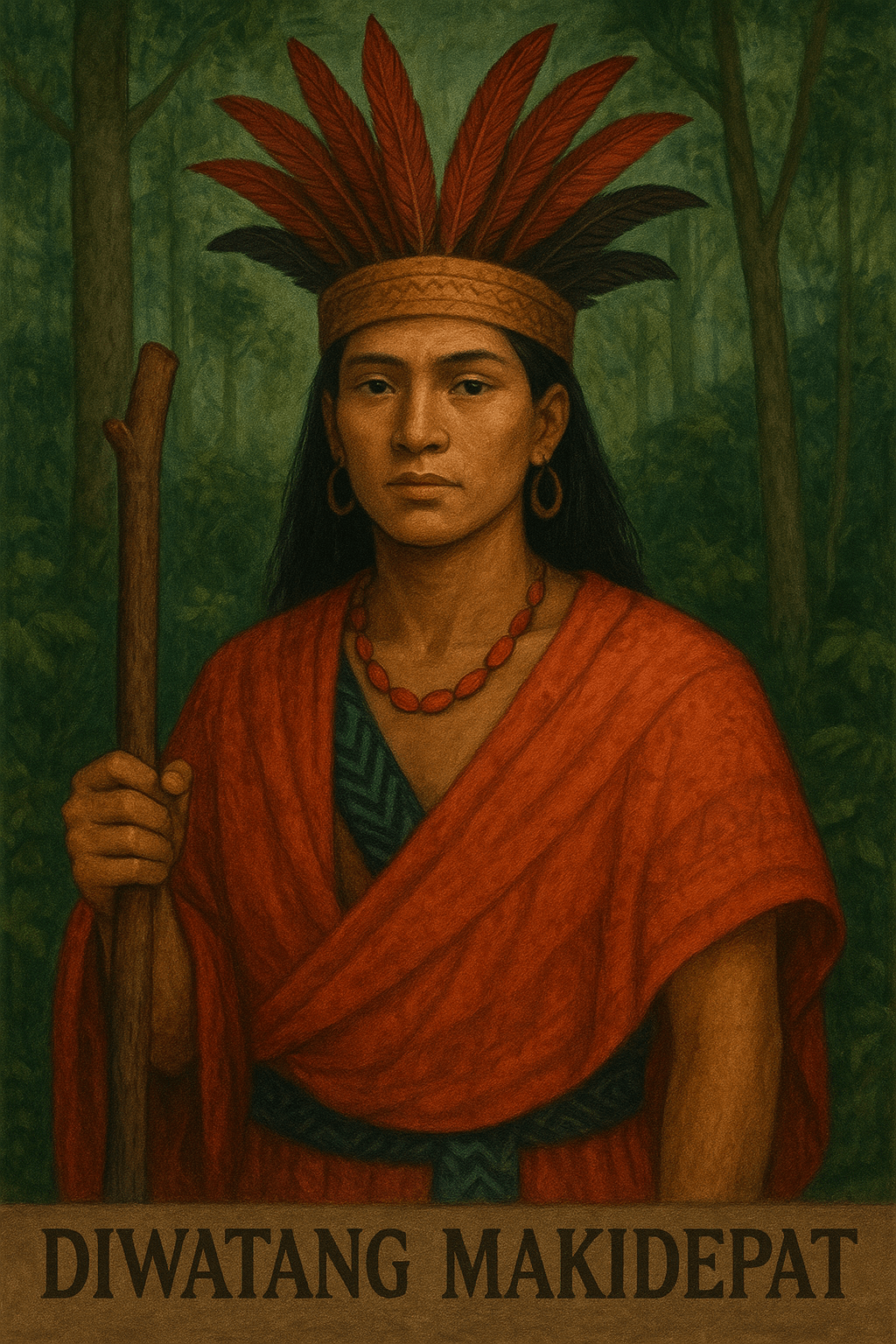
The spiritual landscape of the pre-colonial Philippines is rich with diverse pantheons, but a common philosophical thread unites many of their ultimate creator deities: the idea that the supreme being transcends gender. This concept is exemplified by the Dumagat/Alta people’s belief in Makidepat.
Makidepat: The Gender-Neutral Supreme Being
The Dumagat (and the closely related Alta people, subgroups of the Negrito peoples in Luzon) revere Makidepat (or Makedepat) as their ultimate divine power.
Creator and Provider: Makidepat is unanimously considered the supreme being, creator, and ultimate provider. The Dumagat believe that their ancestral lands and all resources are a gift from Makidepat, instilling a deep sense of environmental stewardship.
Theological Gender: While the term diwata is often used generally for spirits and deities (and is sometimes gender-neutral itself), Makidepat’s role as the supreme creator places the entity beyond simple gender categories. Makidepat is typically presented as a gender-neutral force or a gender-ambiguous entity, rather than a definitively male or female deity.
This aligns with a core principle in comparative mythology: the ultimate source of existence is too vast to be contained by human-defined male or female roles.
⚖️ The Philosophy of Gender Transcendence
The reason why supreme deities in many Filipino cosmologies are often gender-neutral or possess fluid gender (gender ambiguity) is a reflection of a deeper philosophical commitment to balance and unity in the indigenous worldview.
1. The Source of All Duality
The creation myths of many groups, like the Tagalog, operate on dualities (sky/earth, male/female). The supreme being, whether it is Makidepat or the Tagalog supreme god Bathala, must exist above this duality to be the force that initiated it.
To be strictly male or strictly female would make the deity a part of creation, rather than the source of creation.
By transcending gender, the deity is the whole, embodying the perfect blend of all qualities—masculine (strength, action) and feminine (nurturing, patience).
2. Gender Fluidity in Lesser Deities
This transcendent view contrasts with the gender fluidity sometimes seen in more localized or lesser deities, such as the Tagalog goddess of fertility, Lakapati. Lakapati is sometimes depicted as an androgynous or intersex deity, embodying both male and female characteristics. This form of gender-ambiguity is a powerful symbol of fertility, inclusivity, and the harmony of nature. However, the supreme creator’s gender-neutrality is more about absolute transcendence than a symbolic combination of human genders.
In conclusion, Makidepat’s identity as a gender-neutral supreme creator is not an anomaly. It is a powerful example of a widespread spiritual principle in the Philippines: the ultimate divine power is an infinite, cosmic force that is too sublime to be limited by the human distinction of man or woman.
 Templong Anituhan
Leave a comment