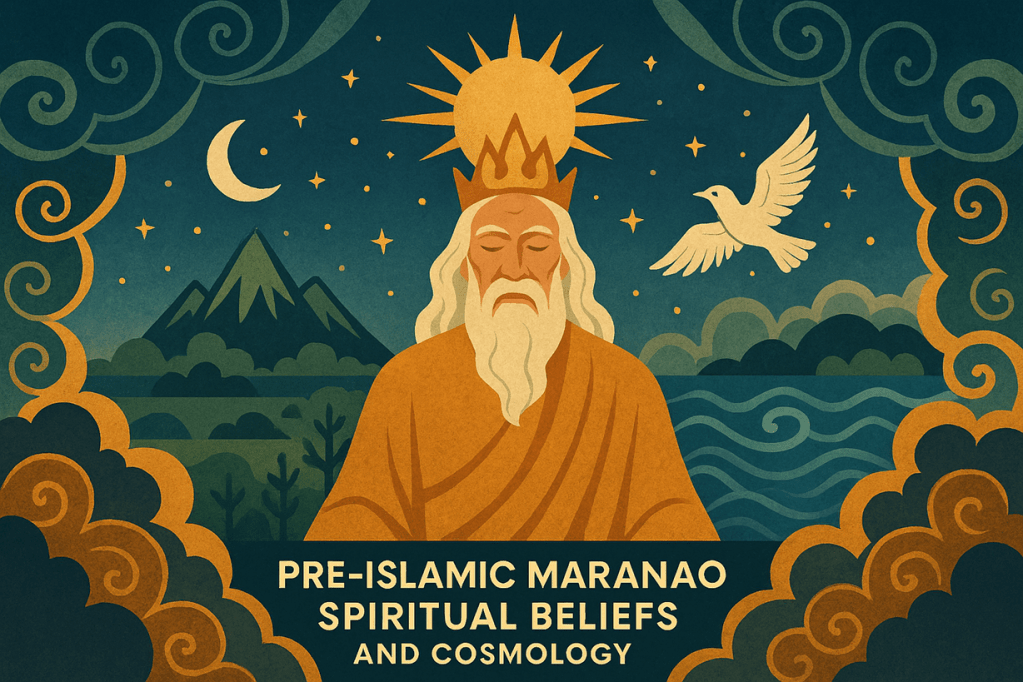
In the heart of Mindanao, the Maranao people have preserved a rich spiritual heritage that predates the arrival of Islam. This belief system, rooted in animism and polytheism, offers a profound cosmological framework centered around the Supreme Being known as Tuhan or Apo sa Langit. At its core lies a sacred map of the universe: the Seven Layers of Heaven, Earth (Dunya), and the Underworld.
🕊️ Identity and Role of Diwatang Tohan
- Tohan was revered as the Supreme Diwata or High God, similar to Bathala in Tagalog and Kabunian in Cordilleran traditions. The name comes from the Austronesian root tuhan, meaning “lord” or “god.”
- He was the source of all life and cosmic order, dwelling in the highest realm of the heavens, overseeing the seven heavens, seven earths, and seven underworlds.
- Tohan was associated with elemental forces—light, water, fire, wind, and earth—symbolizing divine balance and presence.
🌿 Relationship with Other Spirits
- Diwata (nature spirits) and Tonong (ancestral guardian spirits) acted as intermediaries of Tohan’s will. They were not equal to Tohan but served him.
- Tohan was invoked in rituals for creation, healing, and ancestral remembrance, especially when seeking cosmic balance or divine guidance.
🌙 In Maranao Epics (Darangen)
- In the Darangen, Tohan is portrayed as the source of all creation, from whom Diwata and Tonong derive their power. Though not always named directly, his presence is felt through the divine hierarchy and cosmic order.
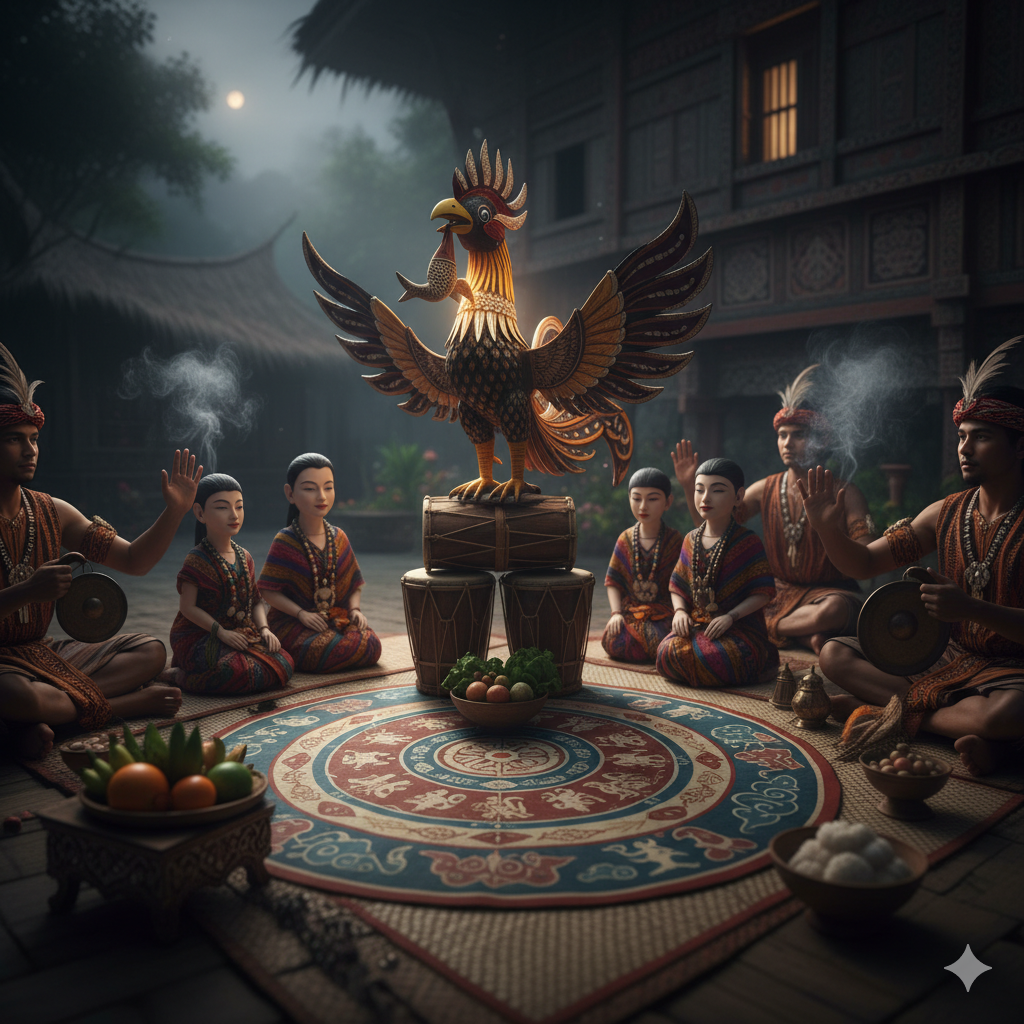
- The Sarimanok, a mythical bird, is often linked to Tohan as a symbol of divine communication and favor.
🔮 Syncretism and Modern Interpretation
- After Islam arrived in the 14th century, Tohan was syncretized with Allah, especially in poetic and cultural expressions. However, indigenous elements persisted in healing practices and folklore.
- In the context of Templong Anituhan, Tohan may be reclaimed as the Diwata of Kaitaasan (Highest Realm), the origin of all Diwata and Anito, and the source of elemental harmony.
The term “Tuhan” as a name for God or Supreme Being is used in several regions and ethnic groups in the Philippines, particularly those with Austronesian linguistic roots and pre-Islamic spiritual traditions. Based on the document and additional sources, here are the key areas and groups where “Tuhan” is or was traditionally used:
🗺️ Philippine Provinces and Ethnic Groups Using “Tuhan”
1. Lanao del Sur and Lanao del Norte (Maranao People)
- The Maranao of Mindanao used “Tuhan” in their pre-Islamic belief system to refer to the Supreme Diwata or High God, later syncretized with Allah after Islamization. [diwatang t…anao tribe | Word]
2. Maguindanao Province (Maguindanaon People)
- The Maguindanaon, closely related to the Maranao, also used “Tuhan” in pre-Islamic contexts. The term was later absorbed into Islamic usage as a synonym for Allah.
3. Sulu and Tawi-Tawi (Tausug and Sama-Bajau Peoples)
- These groups, especially the Tausug, used “Tuhan” in early animistic and Hindu-Buddhist influenced beliefs before Islam became dominant. [yodisphere.com]
4. Palawan (Tagbanua and Palaw’an Tribes)
- While not always explicitly called “Tuhan,” the Tagbanua and Palaw’an tribes have deities with names derived from the same Austronesian root, such as Tuhanum (god of water), showing linguistic and spiritual connections.
5. Northern Mindanao (Lumad Tribes)
- Some Lumad groups (e.g., Manobo, Higaonon) use variations of “Tuhan” or similar-sounding names for their creator gods, reflecting shared Austronesian heritage. [theculturetrip.com]
6. Visayas (Pre-colonial Visayan Beliefs)
- In Visayan mythology, the term Tuhan appears in some oral traditions and folk prayers, though more commonly they used names like Kaptan for the sky god.
🌐 Linguistic Note
- The word “Tuhan” is derived from the Proto-Malayo-Polynesian root tuhan, meaning “lord” or “god.” It is still used in Malay and Indonesian to mean “God,” and its presence in Philippine languages reflects deep Austronesian connections.
The term “Tuhan”, meaning “God” or “Lord”, is widely used across Southeast Asia, especially in countries with Austronesian linguistic roots and Islamic or pre-Islamic spiritual traditions. Here’s a breakdown of where and how “Tuhan” is used:
🌏 Southeast Asian Countries That Use “Tuhan” to Refer to God
1. Malaysia
- “Tuhan” is the standard Malay word for God.
- In Islamic contexts, “Tuhan” is often used interchangeably with Allah, especially in poetic or cultural expressions.
- Indigenous groups like the Jakun and Sakai also use “Tuhan” in their animistic cosmologies, sometimes as “Tuhan Allah”. [pantheon.org]
2. Indonesia
- In Bahasa Indonesia, “Tuhan” is the general term for God, used by Christians, Hindus, and Buddhists.
- Muslims in Indonesia typically use Allah, but “Tuhan” is still used in broader spiritual and interfaith contexts.
- Indigenous and animist traditions also refer to Tuhan as a creator or supreme spirit.
3. Brunei
- As a Malay-speaking Islamic sultanate, Brunei uses Tuhan in religious and cultural expressions, though Allah is dominant in Islamic practice.
4. Philippines
- Among Muslim Filipinos (e.g., Maranao, Maguindanaon, Tausug, Yakan, Sama-Bajau), “Tuhan” was used in pre-Islamic belief systems to refer to the Supreme Being, later syncretized with Allah. [everyculture.com]
- In indigenous Filipino spirituality, “Tuhan” appears as a Diwata of the Highest Realm, especially in Maranao cosmology.
5. Singapore
- In Malay-speaking communities, “Tuhan” is used in interfaith dialogue, literature, and cultural expressions.
🧬 Linguistic and Cultural Roots
- The word “Tuhan” comes from the Proto-Malayo-Polynesian root tuhan, meaning “lord” or “master.”
- It is linguistically related to other terms for God across Austronesian cultures, such as:
- Bathala (Tagalog)
- Kabunian (Cordilleran)
- Magbabaya (Bukidnon)
- Kaptan (Visayan)
In pre-Islamic Maranao belief, Apo sa Langit (also called Apo na Langit) is recognized as the Supreme Creator Deity—the High God who rules over the Upper World (Langit). Here’s a detailed understanding of who Apo sa Langit is:
🌌 Who is Apo sa Langit in Pre-Islamic Maranao Cosmology?
🧬 Name Meaning
- “Apo” means grandfather or ancestor, a term of reverence.
- “Langit” means sky or heaven.
- So, Apo sa Langit translates to “Grandfather of the Sky” or “Lord of Heaven.”
🕊️ Role and Nature
- Apo sa Langit is the ultimate creator, the prime mover of the universe.
- He is transcendent and distant, not directly involved in daily human affairs—a concept known as deus otiosus (inactive high god). [diwatang t…anao tribe | Word]
- All other beings—Diwata (nature spirits), Tonong (ancestral guardians), and elemental forces—are subordinate to him.
🪷 Cosmological Domain
- He resides in the highest layer of the heavens, often described as a shining, golden realm.
- He governs the seven heavens, seven earths, and seven underworlds, maintaining cosmic balance and divine order.
📜 Presence in the Darangen Epic
- Apo sa Langit appears in the Darangen, the Maranao epic, as:
- The creator of Lake Lanao.
- The grantor of divine mandates to heroes like Prince Bantugan.
- The final arbiter in disputes among lesser gods. [diwatang t…anao tribe | Word]
🧭 Spiritual Function
- He is invoked in oaths, healing rituals, and epic recitations, especially in folk Islam and syncretic traditions.
- Ritual invocations often begin with:
“Sa ngaran o Apo sa Langit…”
(“In the name of the Grandfather of the Sky…”)
Based on the document “Diwatang Tuhan of the Maranao Tribe”, the pre-Islamic Maranao cosmology describes a sacred universe composed of:
- Seven Layers of Heaven (Langit)
- Seven Layers of Earth (Dunya)
- Seven Layers of the Underworld
Each layer has distinct functions, inhabitants, and spiritual significance. Here’s a full enumeration and explanation:
🌌 The Seven Layers of Heaven
These celestial realms are home to divine beings, ancestral spirits, and cosmic forces. Each layer—from the Gate of the Sky to the Throne of Tuhan—governs aspects of fate, healing, and spiritual guidance. The highest heaven is the seat of Apo sa Langit, the transcendent creator and source of all life.
🌌 Seven Layers of Heaven (Langit)
| Layer | Function | Inhabitants |
|---|---|---|
| 1st Heaven – Gate of the Sky (Langit a Babaan) | Threshold between Earth and celestial realms | Guardian spirits, mythical birds (Garoda) |
| 2nd Heaven – Realm of Light and Stars | Governs celestial bodies and cosmic order | Spirits of illumination and fate |
| 3rd Heaven – Realm of the Moon and Water Spirits | Controls tides, emotions, and intuition | Lunar beings, sky nymphs |
| 4th Heaven – Realm of the Sun and Fire Spirits | Source of vitality and transformation | Solar Diwata, fire guardians |
| 5th Heaven – Realm of Tonong and Ancestors | Offers wisdom and protection | Ascended Tonong spirits |
| 6th Heaven – Realm of Angels and Messengers | Transmits divine will and cosmic law | Angelic beings, winged guardians |
| 7th Heaven – Throne of Tuhan (Apo sa Langit) | Seat of divine mystery and creation | Tuhan, Tree of Life, primordial spirits |
🌍 The Seven Layers of Earth
The Earth is not a single plane but a multidimensional reality. From the human world to the realm of elemental spirits and ancestral Tonong, each layer supports physical, emotional, and spiritual wellness. Rituals, offerings, and nature-based practices help maintain harmony across these realms.
🌍 Seven Layers of Earth (Dunya)
| Layer | Function | Inhabitants |
|---|---|---|
| 1st Earth – Human World | Physical life and spiritual awareness | Humans, animals, visible nature spirits |
| 2nd Earth – Realm of Karibanga (Dwarfs) | Mystical knowledge and healing | Karibanga, guardians of sacred places |
| 3rd Earth – Home of Nymphs and Water Spirits | Governs emotions and fertility | Sirena, Bantay Tubig |
| 4th Earth – Elemental Spirits Realm | Balances creation and destruction | Diwata of Fire, Wind, Earth |
| 5th Earth – Tonong Spirits Realm | Offers ancestral guidance | Tonong spirits, tribal protectors |
| 6th Earth – Realm of Trials | Spiritual transformation and testing | Mythical beasts, gatekeepers |
| 7th Earth – Sacred Core | Origin of creation and divine mystery | Divine energy, primordial spirits, essence of Tuhan |
🌑 The Seven Layers of the Underworld
These descending realms are inhabited by spirits that influence illness, misfortune, and transformation. Healing requires confronting these forces through ritual, trance, and ancestral invocation. The deepest layer, the Sacred Abyss, holds the mystery of rebirth and divine truth.
🌑 Seven Layers of the Underworld
| Layer | Function | Inhabitants |
|---|---|---|
| 1st Layer – Shadow Realm | Causes confusion and emotional instability | Wandering spirits, lost souls |
| 2nd Layer – Realm of the Busaw | Brings illness and fear | Busaw (malevolent spirits) |
| 3rd Layer – Realm of the Tarabusaw | Causes chaos and destruction | Tarabusaw (demonic entities) |
| 4th Layer – Realm of the Kurita | Emotional drowning and loss of direction | Sea-monster-like beings |
| 5th Layer – Realm of the Pah | Community-wide misfortunes | Giant bird spirits |
| 6th Layer – Realm of Trials | Spiritual crises and moral dilemmas | Guardians of soul trials |
| 7th Layer – Sacred Abyss | Transformation and rebirth | Primordial forces, divine mystery |
In pre-Islamic Maranao cosmology, the Seven Layers of Heaven, Seven Layers of Earth (Dunya), and Seven Layers of the Underworld are not just metaphysical concepts—they deeply shaped how the Maranao people understood life, health, fate, and spiritual connection. Here’s how each realm affected their daily lives and spiritual worldview:
🌌 Seven Layers of Heaven – Divine Influence and Spiritual Alignment
These layers represent ascending realms of purity, light, and divine beings.
🌟 Effects on Life:
- Spiritual Guidance: People believed that divine messages and blessings flowed from the heavens, especially through dreams, omens, and rituals.
- Cosmic Order: The heavens governed seasons, fate, and celestial timing, influencing agriculture, healing, and decision-making.
- Ritual Ascension: Shamans (pamomolong) and epic heroes were said to spiritually ascend these layers to seek wisdom or retrieve lost souls.
🧚 Inhabitants:
- Guardian spirits, Diwata of light and fire, Tonong ancestors, angels, and ultimately Tuhan (Apo sa Langit) in the 7th Heaven.
🌍 Seven Layers of Earth (Dunya) – Physical and Energetic Wellness
These layers reflect the multi-dimensional nature of the human world, from the visible to the mystical.
🌿 Effects on Life:
- Health and Healing: Each layer corresponds to aspects of human wellness—physical, emotional, ancestral, elemental, and spiritual.
- Nature Connection: Respect for forests, rivers, and sacred places was essential to maintain harmony with the spirits of the Earth.
- Spiritual Trials: Some layers were seen as places of testing, where individuals faced challenges that shaped their destiny.
🧝 Inhabitants:
- Humans, Karibanga (dwarfs), water nymphs, elemental Diwata, Tonong spirits, mythical guardians, and divine energies.
🌑 Seven Layers of the Underworld – Shadow Healing and Soul Trials
These descending realms were associated with death, misfortune, and spiritual transformation.
🕯️ Effects on Life:
- Illness and Misfortune: Imbalances or offenses against nature or ancestors could cause spirits from the underworld to affect health and luck.
- Dreams and Possession: Spirits from these layers might appear in dreams or cause spiritual disturbances, requiring healing rituals.
- Soul Journeying: Shamans entered these realms in trance to retrieve lost souls, confront malevolent entities, or restore balance.
👹 Inhabitants:
- Wandering spirits, Busaw (flesh-eaters), Tarabusaw (chaotic demons), Kurita (sea monsters), Pah (giant birds), trial guardians, and primordial forces.
🧘♀️ Holistic Impact on Pre-Islamic Maranao Life
- Rituals: Healing, protection, and guidance rituals were designed to align the person with the right layer of heaven, earth, or underworld.
- Cosmic Balance: Maintaining harmony across these realms was essential for health, prosperity, and spiritual peace.
- Ancestral Connection: The layers of Earth and Heaven were pathways to communicate with Tonong and Diwata, while the Underworld was a place of soul purification.
🧙♂️ Pamomolong: The Traditional Healers
When imbalance occurs, the Maranao turn to Pamomolong—spiritual healers who diagnose illness through dreams, rituals, and cultural wisdom. Their methods include Sanggar (ritual cleansing), Pelimbonen (herbal healing), and Kaphaygo sa Ragat (water purification). These practices restore balance across the cosmological layers.
n pre-Islamic Maranao spirituality, when imbalance occurs in any of the seven layers of Heaven, Earth (Dunya), or the Underworld, it is believed to manifest as illness, misfortune, emotional distress, or spiritual disconnection. To restore balance, the Maranao turned to traditional healers known as Pamomolong.
🧙♂️ Who Are the Pamomolong?
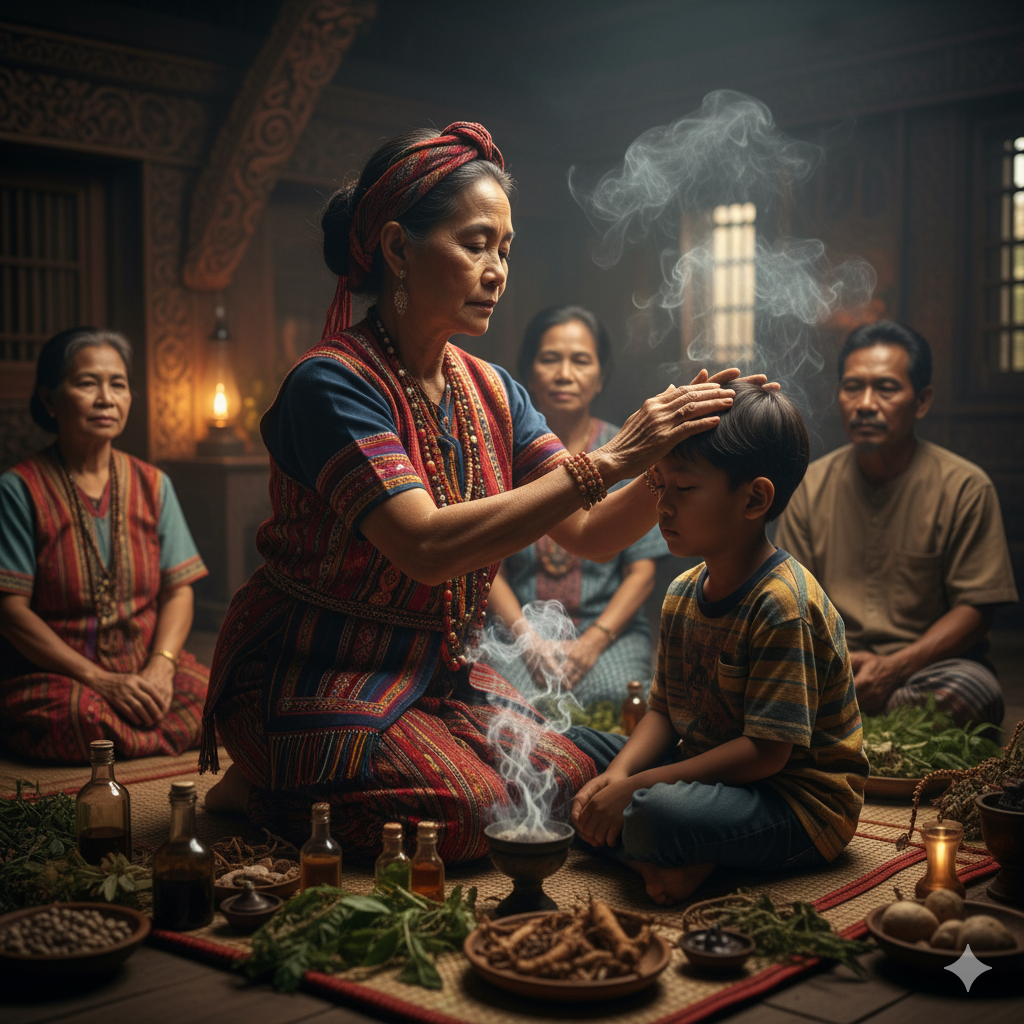
- Pamomolong are spiritual healers and ritual specialists in Maranao tradition.
- They are often chosen by ancestral spirits, trained through dreams, visions, or spiritual calling.
- Their role is to diagnose imbalance, communicate with spirits, and perform healing rituals.
🌿 Healing Methods Used by Pamomolong
1. Sanggar – Ritual to Counteract Fate
- A sacred healing ritual performed to avert death, misfortune, or spiritual harm.
- Involves:
- Water pouring while chanting secret incantations.
- Sacrifice of a white rooster.
- Offerings to spirits under the house (a liminal sacred space).
- Performed only on Wednesdays before 8:00 AM. [diwatang t…anao tribe | Word]
2. Pelimbonen – Herbal Healing
- Use of medicinal plants, roots, and natural elements.
- Herbs are gathered with ritual prayers to enhance their potency.
- Remedies include decoctions, poultices, steam baths, and infusions.
3. Kaphaygo sa Ragat – Water Rituals
- Bathing in Lake Lanao or rivers to cleanse spiritual impurities.
- Often done during specific lunar phases.
- Water is seen as a living spirit that absorbs illness and misfortune.
4. Spirit Invocation and Spellwork
- Use of chants, incantations, and amulets to banish malevolent entities.
- Invocations call upon Diwata, Tonong, and Apo sa Langit for healing and protection.
5. Trance and Dreamwork
- Pamomolong enter altered states to:
- Diagnose spiritual causes of illness.
- Retrieve lost souls from the underworld.
- Receive guidance from ancestral spirits.
6. Pamuhat – Ritual Offerings
- Food, flowers, and symbolic items are offered to spirits.
- Often placed at sacred sites like Lake Lanao or Mount Gurayn.
🧘♀️ Spiritual Philosophy Behind Healing
- Illness is seen as a result of imbalance across the cosmological layers.
- Healing involves realigning the person with the elemental forces, ancestral spirits, and divine will.
- The goal is to restore harmony between the body, soul, nature, and the cosmos.
🌱 Preserving and Sharing the Wisdom
This belief system offers more than cultural identity—it provides a holistic model of healing and spiritual connection. By documenting rituals, creating visual cosmograms, and integrating teachings into modern wellness practices, we can preserve this sacred knowledge.
Preserving the pre-Islamic Maranao cosmology—with its belief in the seven layers of Heaven, Earth, and Underworld, and its healing practices through Pamomolong—can offer profound benefits not only to the Maranao people, but also to modern society globally, especially in the areas of spiritual wellness, cultural identity, and holistic healing.
🌱 How This Belief System Can Be Preserved
1. Documentation and Education
- Integrate Maranao cosmology into academic curricula, especially in anthropology, theology, and indigenous studies.
- Develop modules for seminaries like your own at Templong Anituhan, highlighting the cosmological layers and healing practices.
- Translate oral traditions (e.g., Darangen) into accessible formats—books, videos, podcasts.
2. Ritual Revitalization
- Reintroduce rituals like Sanggar, Pelimbonen, and Kaphaygo sa Ragat in community healing events.
- Use Binabaylan-style ceremonies to honor the cosmological layers and ancestral spirits.
3. Art and Symbolism
- Create visual cosmograms of the seven realms for use in temples, healing centers, and educational materials.
- Encourage Maranao okir art to depict Apo sa Langit, Tonong, and the cosmological journey.
4. Community-Based Healing
- Train modern healers in Pamomolong-inspired methods, integrating herbal medicine, water rituals, and spiritual diagnosis.
- Use these practices in mental health programs, especially for trauma healing and ancestral reconnection.
5. Digital Preservation
- Build online archives and interactive maps of Maranao cosmology.
- Share teachings through platforms like YouTube, WordPress, and BuyMeACoffee, as you already do.
🌍 Benefits to Modern People (Beyond Maranao)
🧘♀️ 1. Holistic Wellness
- Offers a non-Western model of healing that integrates body, spirit, nature, and community.
- Helps people reconnect with natural rhythms, ancestral wisdom, and spiritual purpose.
🧬 2. Cultural Identity and Decolonization
- Revives indigenous knowledge systems suppressed by colonial and religious forces.
- Empowers communities to reclaim their spiritual heritage and redefine their narratives.
🌿 3. Environmental Harmony
- Encourages respect for nature spirits and sacred places, promoting ecological stewardship.
- Rituals tied to elemental balance can inspire sustainable living.
🕊️ 4. Interfaith Dialogue
- Provides a bridge between indigenous spirituality and world religions, especially Islam and Christianity.
- Promotes peaceful coexistence through shared values like healing, protection, and divine order.
🌍 Benefits for Modern Society
- Promotes holistic wellness and ecological harmony
- Revives indigenous identity and decolonizes spirituality
- Offers tools for emotional healing and ancestral reconnection
- Encourages interfaith dialogue and cultural resilience
🔚 Closing Remarks
The cosmology of the Maranao is not just a relic of the past—it is a living tradition that speaks to the soul of humanity. In a world seeking balance and meaning, these teachings offer a path to healing, harmony, and sacred remembrance.
📣 Call to Action
Let us honor and preserve the wisdom of the Maranao. Share this post, support indigenous healers, and explore how these teachings can enrich your own spiritual journey. For ritual guides, visual maps, or curriculum modules, connect with Templong Anituhan and join the movement to reclaim ancestral knowledge.
 Templong Anituhan
Leave a comment