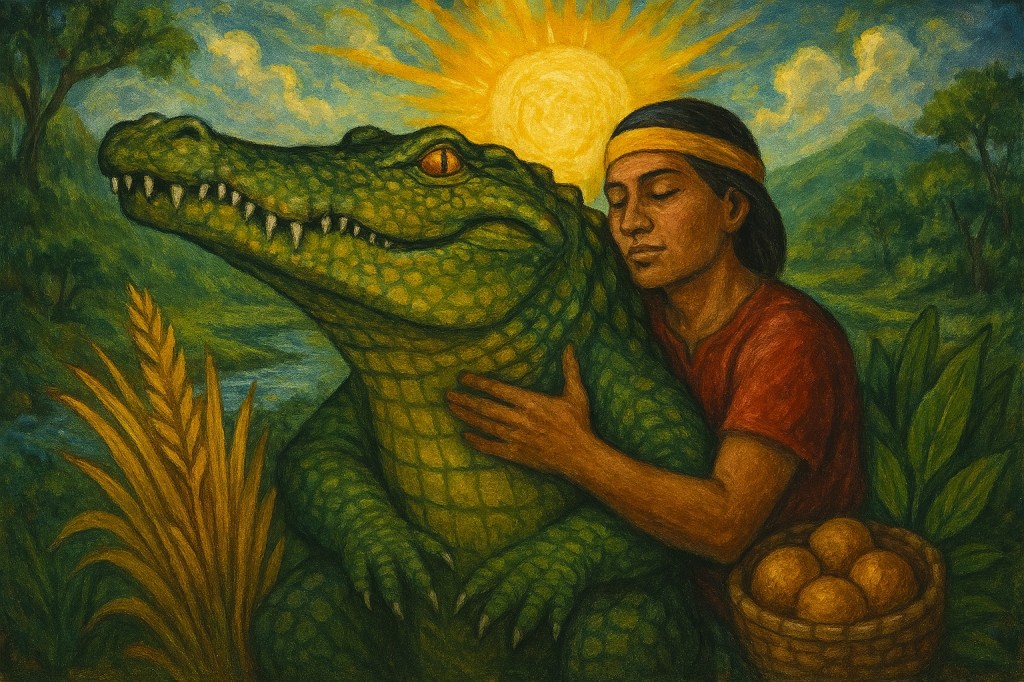
In Filipino culture, the term “buwaya” (crocodile) is often used to describe corrupt individuals, particularly those in positions of power. This metaphor reflects traits such as greed, stealth, and danger, which are associated with both the animal and unethical behavior.
However, it is important to clarify that:
Crocodiles are not corrupt in the biological sense.
As animals, crocodiles act purely on instinct. They do not possess moral reasoning, ethical judgment, or social systems that define human corruption. Their behavior—whether hunting, defending territory, or surviving—is part of the natural order and not subject to human concepts of right or wrong.
Therefore, while the crocodile may serve as a powerful symbol in cultural critique, we must distinguish between symbolic language and biological reality. In the spirit of Hilot Binabaylan, which seeks harmony with nature and truth in healing, we honor all creatures as part of the divine creation, free from human moral projections.
Furthermore, in some provinces of the Philippines—such as Pampanga—the crocodile is not merely a symbol of fear or corruption, but a sacred being. In Kapampangan mythology, crocodiles are associated with **ancestral spirits and divine guardianship, and are even revered as Diwata or spiritual entities.
One such Diwata is Apung Iru, a crocodile deity venerated in Pampanga. Apung Iru is believed to dwell in rivers and estuaries, guarding the waters and protecting the people from misfortune. Those who honor Apung Iru are said to receive blessings of:
– Protection from danger, especially while traveling or crossing rivers
-Abundance and fertility, as crocodiles are symbols of life and regeneration
– Spiritual strength and resilience, invoking the crocodile’s power and endurance
**Call to Action:
> Let us no longer use the word “buwaya” as a synonym for corruption. Instead, let us reclaim the sacred image of the crocodile as a guardian of nature and a vessel of divine power. As Binabaylan, we are entrusted with restoring balance and truth—not only in healing the body, but also in healing the language and symbols we use. Let us teach our communities to see the crocodile not as a curse, but as a blessing and a protector of the sacred waters and ancestral wisdom.
- Comment
- Reblog
-
Subscribe
Subscribed
Already have a WordPress.com account? Log in now.
 Templong Anituhan
Leave a comment