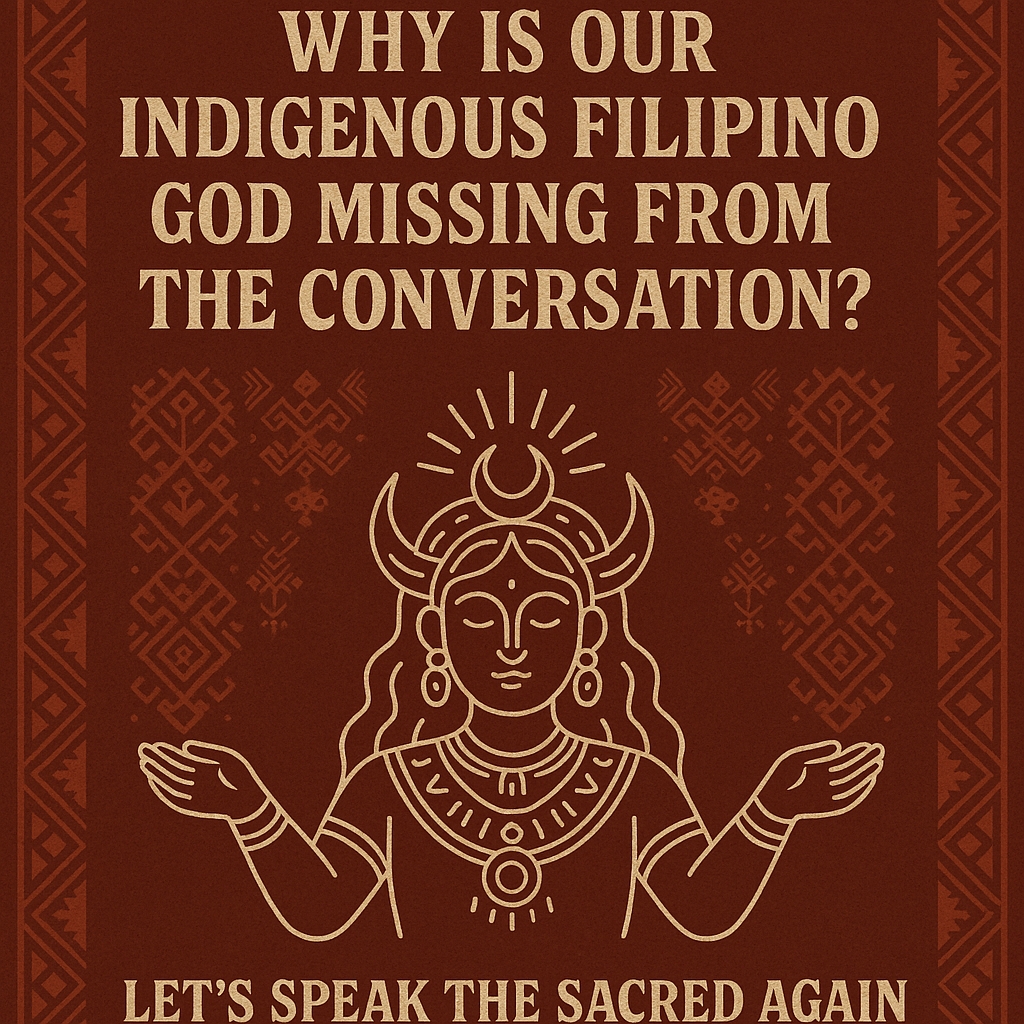
When we talk about Indigenous Peoples in the Philippines, the focus often falls on tribes, languages, dances, traditional clothing, and ancestral lands. These are all vital aspects of our heritage—but there’s something deeply missing.
Where is our Indigenous Filipino God in these conversations?
Why do government agencies, cultural institutions, and even certified Indigenous People Organizations rarely speak of our Diwata, our Anito, our sacred cosmologies?
Centuries of colonization have taught us to hide our gods. Spanish missionaries labeled our beliefs as pagan. American systems replaced our cosmologies with Western frameworks. Even today, many Indigenous communities are Christianized, and ancestral spirituality is often forgotten—or worse, feared.
The Silence of the Sacred
Government frameworks focus on what can be seen and measured: land, language, crafts. But spirituality is the soul of culture. Without it, we are preserving the shell, not the spirit.
We Must Reclaim the Sacred
Our Diwata are not myths—they are living forces of nature, healing, and wisdom. They are part of our identity as Filipinos. To truly honor Indigenous culture, we must also honor the Indigenous Filipino God and the sacred traditions that connect us to the land, the ancestors, and the cosmos.
Call to Action: Let’s Speak the Sacred Again
🌀 If you are an Indigenous Filipino, speak of your Diwata.
🌀 If you are a cultural worker, include spirituality in your advocacy.
🌀 If you are a policymaker, recognize the sacred in your frameworks.
🌀 If you are a seeker, learn from the Binabaylan, the Babaylan, the spiritual elders.
Let us not be afraid to say: We have our own God. We have our own sacred ways. And they are beautiful.
 Templong Anituhan
Leave a comment