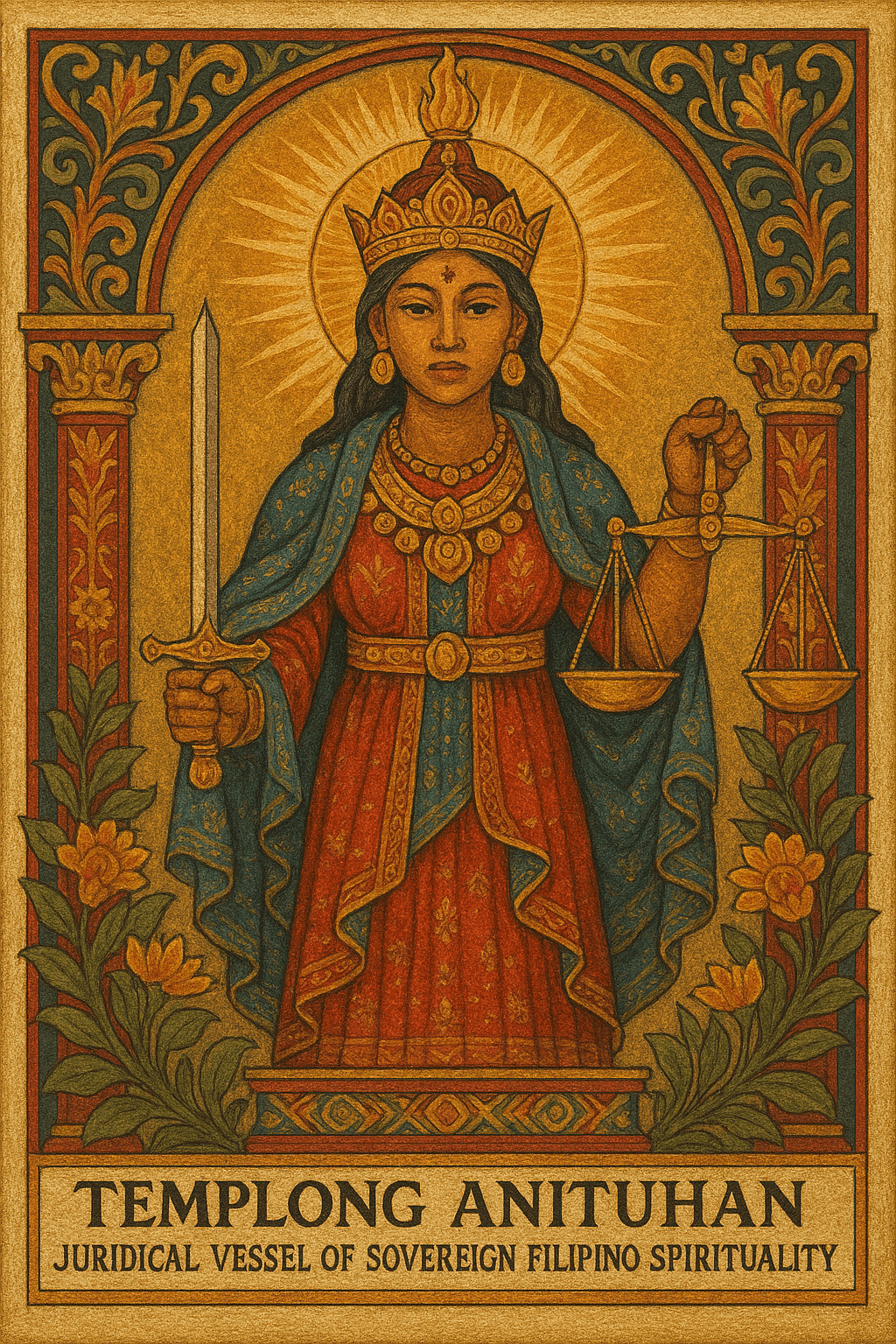
Under the 1987 Philippine Constitution, sovereignty resides in the Filipino people. This foundational principle affirms that all political authority and cultural expression emanate from the collective will of the nation. While sovereignty is vested in natural persons—citizens of the Republic—juridical persons such as Templong Anituhan Inc. play a vital role in manifesting that sovereign will through organized spiritual and cultural practice.
Templong Anituhan Inc. stands as a sacred embodiment of the sovereign Filipino spirit, rooted in ancestral wisdom and protected by the 1987 Philippine Constitution. As a legally registered religious and cultural organization, it serves not only as a spiritual sanctuary but also as a juridical vessel through which the Filipino people’s indigenous identity and healing traditions are preserved and expressed.
Constitutional Protection and Spiritual Legitimacy
Under the 1987 Constitution, sovereignty resides in the Filipino people. While this primarily refers to natural persons, juridical entities like Templong Anituhan Inc. are recognized as legitimate vessels through which sovereign individuals express their collective will, especially in spiritual and cultural domains.
Templong Anituhan Inc. is protected by:
- Article II, Section 6: “The separation of Church and State shall be inviolable.”
- Article III, Section 5: “No law shall be made respecting an establishment of religion, or prohibiting the free exercise thereof…”
These provisions affirm the temple’s right to operate independently, conduct rituals, teach indigenous spirituality, and organize its community without interference from the State.
Role as a Juridical Vessel
As a juridical person, Templong Anituhan Inc.:
- Holds legal recognition and can own property, enter contracts, and represent its members.
- Embodies the sovereign will of its community through spiritual practice and cultural preservation.
- Serves as a guardian of Filipino ancestral healing arts, such as Hilot, Binabaylan, and other indigenous modalities.
Understanding Autonomous Social Institutions in the Philippine Constitution
An autonomous social institution refers to an organization or community that operates independently from the government or external authorities, especially in matters of belief, practice, governance, and internal affairs. In the context of the 1987 Philippine Constitution, this term applies to entities such as religious organizations, schools, and cultural communities.
🔹 Key Characteristics
- Self-Governance: They manage their own affairs, including leadership, teachings, rituals, and internal rules.
- Legal Recognition: They are recognized by law as juridical persons, capable of owning property, entering contracts, and being held accountable.
- Constitutional Protection:
- Article II, Section 6: “The separation of Church and State shall be inviolable.”
- Article III, Section 5: “No law shall be made respecting an establishment of religion, or prohibiting the free exercise thereof…”
- Cultural and Spiritual Expression: These institutions preserve indigenous, religious, or cultural traditions, enriching national identity.
🔹 Application to Templong Anituhan Inc.
Templong Anituhan Inc., as a religious and cultural organization, qualifies as an autonomous social institution because:
- It governs its own spiritual practices and teachings.
- It is legally registered and recognized.
- It expresses the sovereign will of its members through indigenous Filipino spirituality.
- It is protected from government interference in its religious affairs.
This status affirms the temple’s role as a juridical vessel of sovereign Filipino spirituality, contributing to cultural preservation and national development.
 Templong Anituhan
Leave a comment