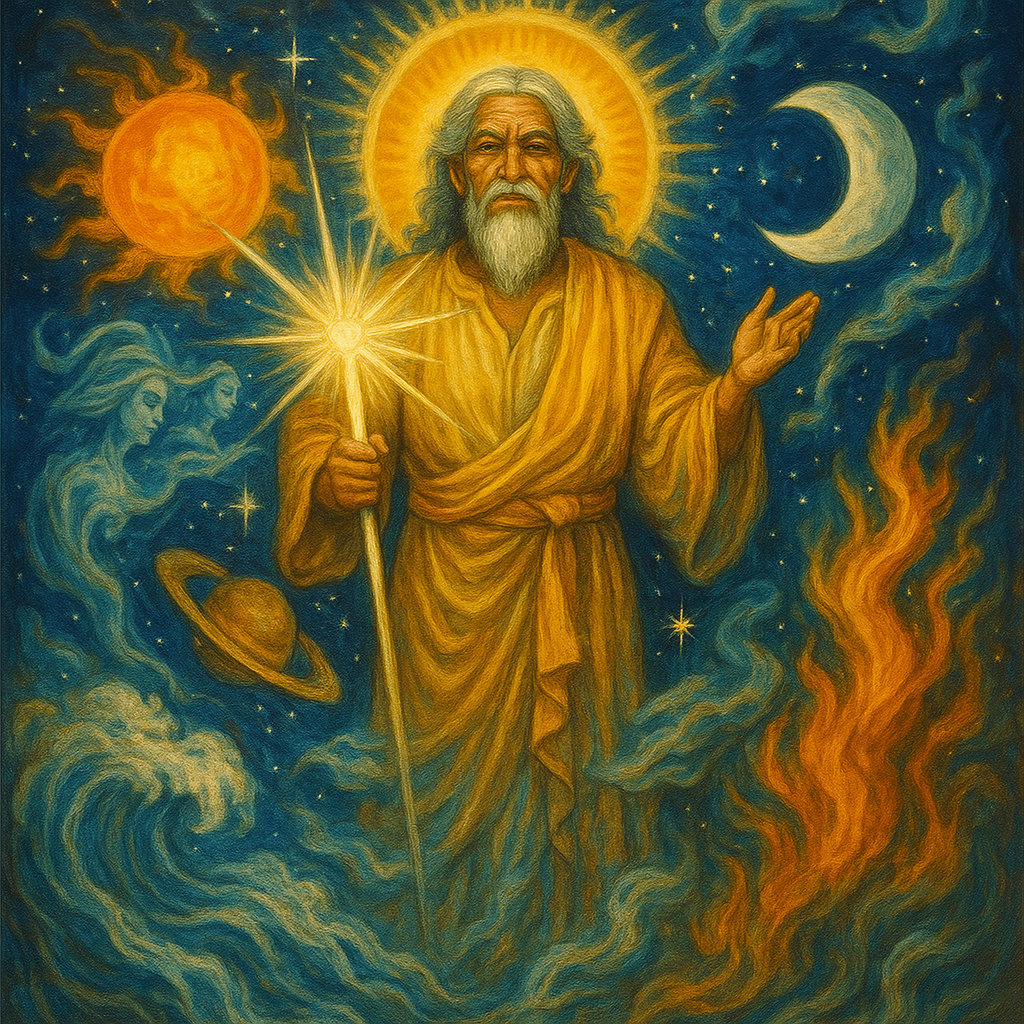
Panangidayew ed Ama-Gaolay, Ama tan Agneng,
(Praise to Ama-Gaolay, Father and Light,)Sikay so mangankon ed bilay tan lawas.
(You are the giver of life and light.)Dayew mi ed sikay, tan panangaro mi ed likas ya inaram mo.
(We praise you, and love the nature you have made.)Agueo tan Bulan, anak mo, so mangiwaras ed oras tan kapia.
(Agueo and Bulan, your children, bring time and peace.)Ipakita mo kami ed dalan na panangaro, panangibagey, tan panangidayew.
(Show us the path of love, harmony, and praise.)Amen! Maituloy La!
In Pangasinense mythology, Ama-Gaolay (also spelled Amangoaley) is revered as the supreme deity and creator god. He is simply referred to as Ama, meaning “father,” and is described as the ruler of all other deities and the creator of mankind
The mythology portrays Ama-Gaolay as a transcendent being who resides in an aerial abode, from which he sees everything. His divine authority is unquestioned, and he is the father of Agueo (the sun god) and Bulan (often associated with the moon), both of whom are obedient to him. This familial structure reinforces his role as the originator of celestial order and human life.
Unlike other mythologies where deities rise through conflict or succession, Ama-Gaolay’s supremacy appears to be inherent and foundational—he is the primordial creator, existing before all others and establishing the cosmic hierarchy.
The Pangasinense people have a rich oral tradition, and their myths often reflect their cosmological views, social values, and natural environment. Ama-Gaolay’s role as a creator and overseer aligns with the community’s reverence for ancestral wisdom and celestial guidance.
In Pangasinense mythology, the celestial order under Ama-Gaolay (also known as Amangoaley) reflects a structured divine hierarchy centered around his role as the supreme creator and overseer.
The Celestial Order According to Ama-Gaolay
- Ama-Gaolay (Amangoaley) –
The supreme deity, referred to simply as Ama (“father”). He is the creator of mankind and the ruler of all other deities. Ama resides in an aerial abode, from which he sees everything, symbolizing his omniscience and divine authority [1]. - Agueo –
The sun god, described as morose and taciturn, yet obedient to his father, Ama. He lives in a palace of light, representing the sun’s brilliance and its role in the cosmic balance [1]. - Bulan –
The moon deity, often associated with beauty and gentleness. Like Agueo, Bulan is a child of Ama and follows his divine order, contributing to the balance of day and night.
This celestial structure emphasizes obedience, harmony, and cosmic balance, with Ama-Gaolay at the top as the source of life and order. His children, the sun and moon deities, maintain the rhythm of time and nature under his guidance.
Spiritual Teachings and Values Associated with Ama-Gaolay
While not codified as commandments, the following values and practices are associated with his worship:
- Reverence for the Divine Order
Ama-Gaolay is seen as the source of cosmic balance, with his children (Agueo the sun and Bulan the moon) maintaining the rhythm of nature. This implies a teaching of respect for natural cycles and harmony [1]. - Obedience and Devotion
His children are described as obedient, suggesting that loyalty and submission to divine will are key virtues [1]. - Spiritual Communication through Rituals
Ama-Gaolay was worshipped through mediums called manag-anito, who acted as spiritual intermediaries. This reflects a belief in spiritual guidance and ancestral wisdom [2]. - Integration with Catholic Beliefs
When Catholicism arrived, Ama-Gaolay was aligned with the concept of one true God, and the Virgin Mary was seen as a goddess mother figure. This blending suggests a teaching of spiritual adaptability and reverence for maternal divinity [3].
While there are no written commandments, the oral traditions, ritual practices, and cosmic symbolism surrounding Ama-Gaolay offer a rich spiritual framework rooted in balance, obedience, and reverence.
In Pangasinense mythology, the concept of natural cycles and harmony under Ama-Gaolay (Amangoaley) is deeply rooted in the people’s spiritual connection to nature, celestial[RC1] rhythms, and ancestral reverence. While not codified like in organized religions, these principles are reflected in oral traditions and ritual practices.
Natural Cycles to Respect
- Day and Night Cycle
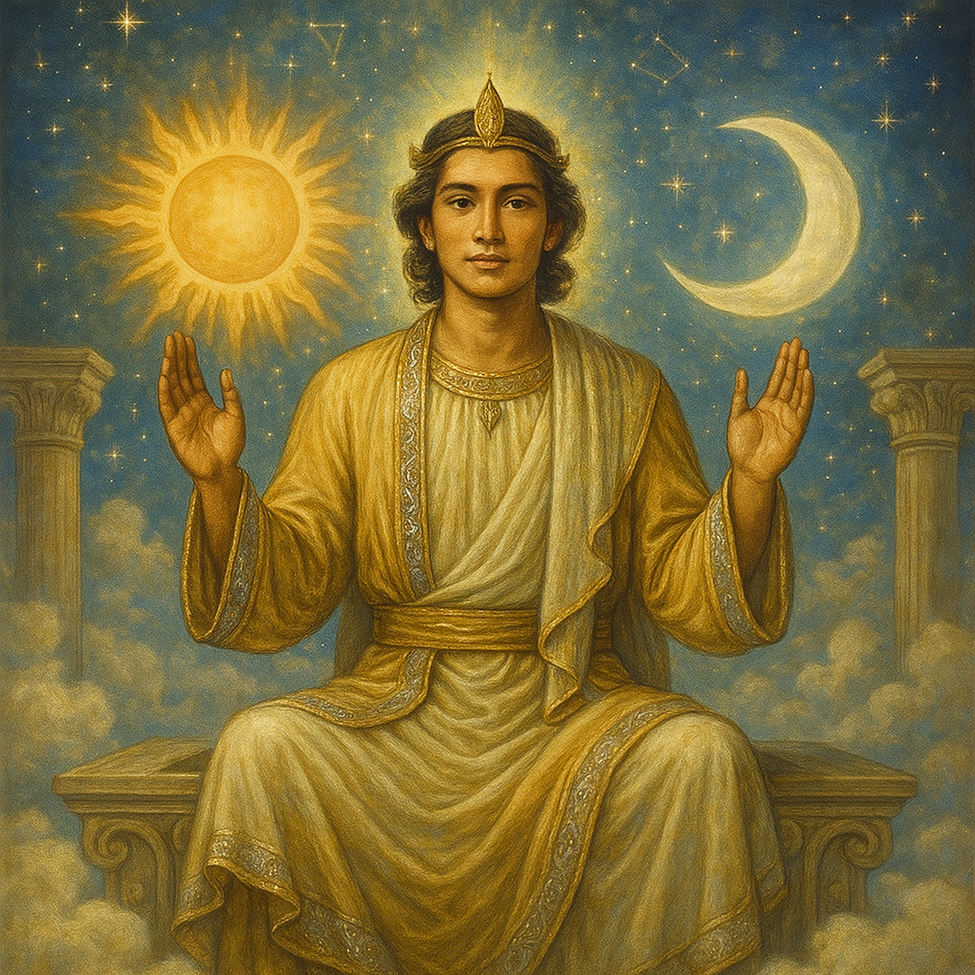
Governed by Ama-Gaolay’s children:- Agueo, the sun god, represents light, activity, and growth.
- Bulan, the moon deity, symbolizes rest, reflection, and beauty.
Their obedience to Ama-Gaolay maintains the balance of time, encouraging people to live in rhythm with nature’s flow [1].
- Seasonal Changes
Though not explicitly detailed in myths, agricultural communities like those in Pangasinan naturally respected planting and harvest seasons, guided by celestial signs and ancestral wisdom. - Life and Death
The cycle of birth, life, death, and ancestral remembrance is central. The manag-anito (spiritual mediums) facilitated rituals that honored the dead and sought guidance from spirits, reinforcing the idea of continuity and spiritual harmony [1]. - Tides and Lunar Phases
As a coastal region, Pangasinan’s people were attuned to lunar cycles affecting tides and fishing. Bulan’s influence over the moon was seen as part of Ama-Gaolay’s divine order.
Harmony to Uphold
- Obedience to Divine Will: Just as Agueo and Bulan obey Ama-Gaolay, humans are expected to live in respectful alignment with the divine order.
- Respect for Nature: The land, sea, and sky are sacred spaces. Rituals and offerings were made to maintain balance and avoid spiritual disruption.
- Community and Ancestral Connection: Harmony also meant living peacefully within the community, guided by ancestral teachings and spiritual intermediaries.
Respectfully aligning with the divine order in the context of Ama-Gaolay’s mythology involves living in harmony with nature, community, and spiritual traditions. Here are some meaningful ways to do that:
🌿 1. Live in Rhythm with Nature
- Honor the cycles of day and night: Be active during the day (Agueo’s domain) and reflective or restful at night (Bulan’s domain).
- Respect seasonal changes: Follow traditional agricultural or fishing cycles, guided by lunar phases and ancestral wisdom.
- Avoid waste and destruction: Treat natural resources as sacred gifts from the divine.
🧘 2. Practice Spiritual Awareness
- Participate in rituals: Engage in ancestral rites or local spiritual practices, especially those led by manag-anito (spiritual mediums).
- Offer gratitude: Make offerings or prayers to Ama-Gaolay and nature spirits to show reverence.
- Seek balance: Avoid extremes in behavior, emotions, or decisions—balance is key to divine harmony.
🤝 3. Uphold Community Values
- Respect elders and ancestors: Their wisdom is seen as an extension of divine guidance.
- Help others: Harmony in the community reflects cosmic order.
- Avoid conflict: Resolve disputes peacefully and honor relationships.
🌀 4. Be Obedient to the Divine Will
- Follow the example of Agueo and Bulan: They obey Ama-Gaolay’s order, maintaining cosmic balance.
- Listen to spiritual signs: Dreams, omens, and natural phenomena may carry divine messages.
- Live with humility: Recognize that human life is part of a greater spiritual design.
Why do we need to obey the Divine will?
Obeying the Divine will is a concept deeply rooted in many religious and spiritual traditions. The reasons for doing so can vary depending on one’s beliefs, but here are some common perspectives across different faiths and philosophies:
🌟 1. Alignment with a Higher Purpose
Many believe that the Divine will represents a perfect plan or higher wisdom. By obeying it, individuals align themselves with a purpose greater than their own, leading to a more meaningful and fulfilling life.
🙏 2. Moral and Ethical Guidance
Divine will often serves as a moral compass, guiding people toward what is right and just. Obedience helps cultivate virtues like compassion, humility, honesty, and selflessness.
🕊️ 3. Inner Peace and Harmony
Spiritual traditions teach that surrendering to the Divine will brings peace of mind, as it frees individuals from the anxiety of trying to control everything. Trusting in divine wisdom can lead to emotional and spiritual balance.
🌱 4. Growth Through Faith
Obeying the Divine will often requires faith, especially in difficult times. This faith can strengthen resilience, deepen spiritual understanding, and foster personal growth.
⚖️ 5. Accountability and Responsibility
In many religions, obedience to the Divine will is tied to accountability—whether in this life or the afterlife. It encourages individuals to live responsibly and consider the consequences of their actions.
🧭 6. Community and Belonging
Following divine guidance often connects people to a spiritual community with shared values and beliefs, fostering unity, support, and collective purpose.
Is the divine will also known as destiny?
Great question! While Divine will and destiny are closely related concepts, they aren’t exactly the same. Here’s a breakdown of how they differ and overlap:
🌌 Divine Will
- Refers to the intentions or plans of a divine being (God, gods, or universal spirit).
- Often seen as active and purposeful—a guiding force that shapes events according to a higher wisdom.
- In religious contexts, it’s something people are encouraged to follow or obey through faith, prayer, and moral living.
- Example: In Christianity, believers seek to align their lives with God’s will.
🔮 Destiny
- Refers to a predetermined course of events—what is “meant to happen.”
- Often viewed as inevitable or fated, regardless of personal choices.
- Can be spiritual or philosophical, and not always tied to a deity.
- Example: In Greek mythology, even gods were subject to fate (Moirae or Fates).
🌠 Where They Overlap
- In many belief systems, destiny is shaped by Divine will.
- People may see their life path as both divinely guided and preordained.
- The idea of surrendering to destiny can be similar to trusting in divine wisdom.
🧭 Summary
| Concept | Divine Will | Destiny |
|---|---|---|
| Source | A divine being or higher power | Cosmic order or fate |
| Nature | Intentional, moral, guiding | Inevitable, fixed, unfolding |
| Human Role | Obey, align, trust | Accept, fulfill, discover |
| Flexibility | May involve free will and choices | Often seen as fixed or unavoidable |
 Templong Anituhan
Leave a comment