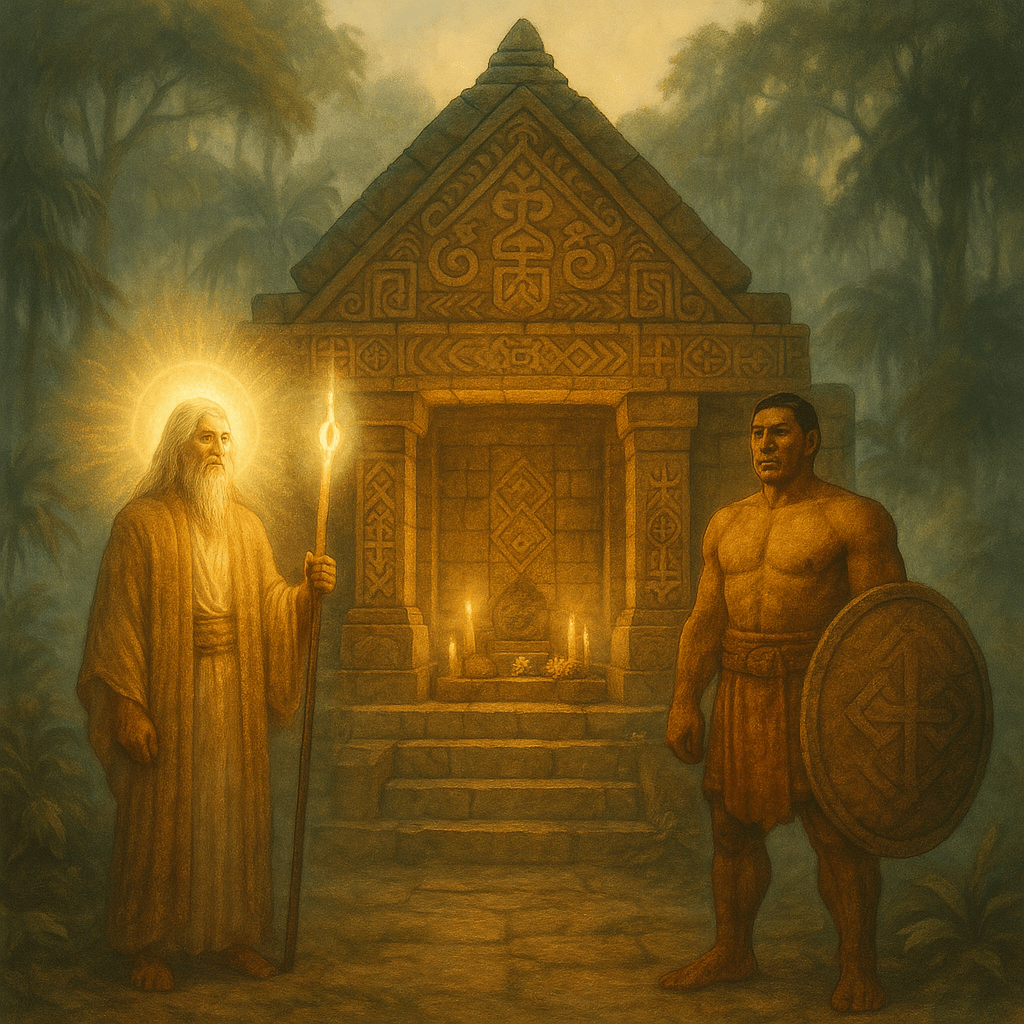
In the heart of Filipino indigenous traditions, the relationship between humans and deities is not one of domination or distance—it is one of reciprocity, reverence, and deep kinship. The deities, known in various communities as Diwata, Anito, or spirits of nature and ancestors, are not faraway gods—they are living presences in the rivers, mountains, winds, and dreams of the people.
They are not only worshipped—they are lived with.
🌿 1. The Diwata as Guides of Wisdom and Purpose
In many indigenous communities, such as the Tagalog, Ifugao, Kankanaey, and Manobo, deities are seen as teachers and guides. They offer wisdom through dreams, omens, and the voices of elders. They help humans remember their ancestral paths, reconnect with the land, and live in alignment with the rhythms of nature.
“The Diwata do not shout. They whisper through the rustling of leaves, the flight of birds, and the silence of the forest.”
When a person is lost—spiritually or emotionally—it is often the Diwata who send a sign, a dream, or a healer to guide them back to balance.
🛡️ 2. The Anito as Guardians of Balance and Protection
The Anito, often ancestral spirits or nature guardians, are invoked to protect the community from illness, misfortune, and spiritual imbalance. They are the keepers of sacred boundaries, ensuring that rituals are respected, offerings are made, and harmony is preserved.
In rituals like the pagtatawas, panawagan, or alay, the Anito are called upon to shield the home, bless the harvest, or guard the soul of a newborn.
“To forget the Anito is to forget the roots that hold the tree upright.”
🌾 3. The Spirits as Providers of Blessings and Abundance
Deities are also givers of life—they bring rain to the fields, fish to the rivers, and healing to the sick. In return, humans offer rituals, chants, dances, and food as acts of gratitude and reciprocity.
This sacred exchange is not transactional—it is relational. The more we honor the spirits, the more we live in harmony with the world they help sustain.
“When the Diwata are pleased, the land sings. When they are forgotten, the earth grows silent.”
🔥 4. The Deities as Keepers of Law and Harmony
In indigenous cosmology, there is no separation between spiritual law and natural law. The Diwata uphold the cosmic order—ensuring that humans live with respect for the land, the ancestors, and each other.
When this balance is broken—through greed, violence, or disrespect—the deities may send warnings: failed crops, strange dreams, or illness. These are not punishments, but calls to restore harmony.
🌀 5. The Diwata as Bridges Between Worlds
Perhaps most beautifully, the deities serve as bridges between the seen and unseen. Through them, humans connect with the spirit world, the ancestral realm, and the sacred forces of nature.
In rituals led by babaylan, mumbaki, or katalonan, the deities are invited to enter the circle, to speak, to heal, and to bless. These moments remind us that we are never alone—we are always surrounded by spirit.
🌙 Living in Sacred Relationship
To live in the way of Anituhan is to live in constant relationship with the deities—not just in ritual, but in everyday life:
- When we plant with intention, we honor the spirits of the land.
- When we speak with kindness, we echo the wisdom of the ancestors.
- When we offer food to the river, we remember that we are not the only ones who eat.
✨ Reflection:
“The Diwata do not ask for temples of stone.
They ask for hearts that remember.”
May we walk gently, speak truthfully, and live in a way that honors the sacred presence of the deities in all things.
 Templong Anituhan
Leave a comment