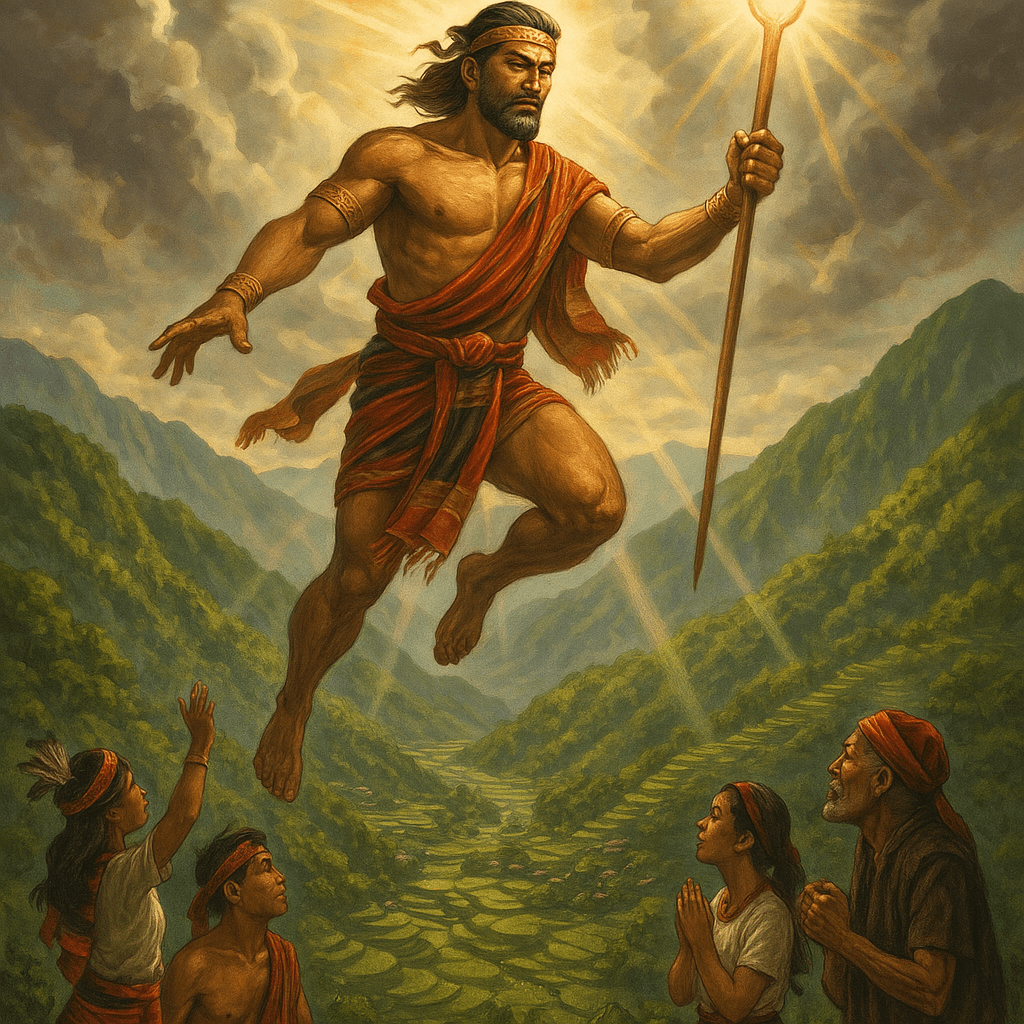
It was on the 10th of May 2025 during my 47th Birthday that Diwatang Lumawig came to us.
From then on, I formally made my devotion in getting to know the Diwatang Lumawig. So, I search first how to praise the Diwatang Lumawig, then I found the words:
Masedsed Ay Lumawig, sin ka ay tsaya! (Praise to you Lumawig, you who came down from Heaven!)
As a fellow student of Ancient Indigenous Filipino Spirituality, especially in getting to know ancient indigenous Filipino Deity, I feel that it is appropriate that we know first how to properly Praise the Diwata using the local language that ancient indigenous people used to worship the Diwatang Lumawig and that is through the Bontoc Tribe of the Mountain Province which can be found in Northern Luzon Philippines.
With the words of Praise I learn, questions came in to my mind, who is Diwatang Lumawig and Why he came down from Heaven? As I put these questions in mind, the Diwatang Lumawig starts to reveal himself.
Accordingly, Diwatang Lumawig is the second son of Maknongan Apunihon (the supreme deity of Ifugao) and the brother of Itutungko Kabunyian which is honored in the Cordillera Region and the eldest son of Maknongan Apunihon.
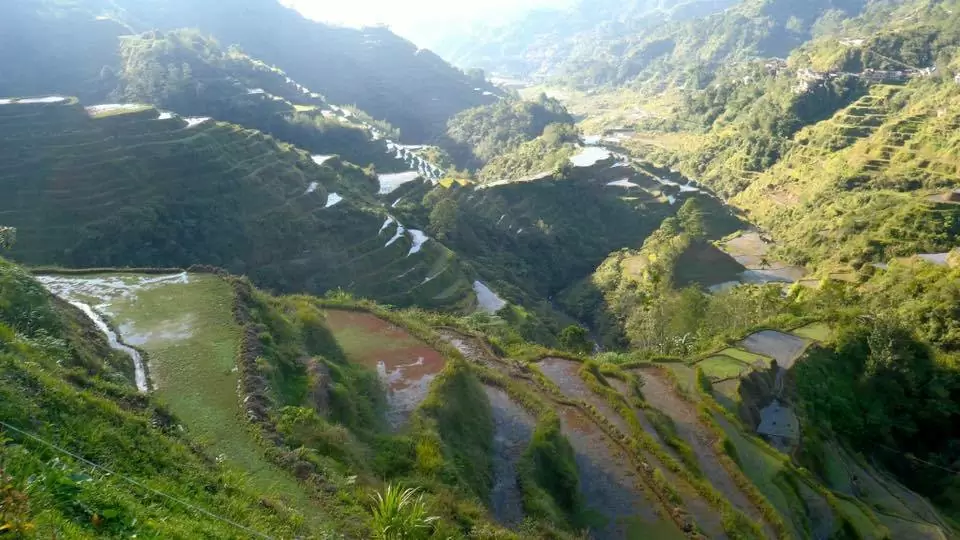
He descended from heaven to Mount Kalawitan which is located in the Cordillera Region of Northern Luzon,specifically in the towns of Sabangan and Bontoc, Mountain Province. He seeks a place to settle and marry and found her wife Bugan and live with her at Barangay Alab, Municipality of Bontoc, Mountain Province. Bugan, being a mortal woman and wife of the Diwatang Lumawig, is often portrayed as beautiful and virtuous mortal woman whom Lumawig chose to marry after descending from the sky. She is associated with Fertility, Motherhood and nurturing aspect of life. Her union with Lumawig symbolizes the connection between the divine and the human world. Through her, the divine lineage becomes part of the human race. She is considered the mother of important deities or symbolic figures, such as Bangan (goddess of romance) and Obban (goddess of reproduction), depending on the version of the myth.
It seems that I emphasized well the Family Tree of Diwatang Lumawig even the location where he lives but have forgot to mention why he came down from heaven to earth. Well, here it is:
Diwatang Lumawig descended from Heaven to teach humanity with his Divine Knowledge and Skills on:
- How to irrigate rice fields
- How to conduct rituals and ceremonies
- How to live harmoniously and govern themselves
His presence helped shape the social, agricultural, and spiritual systems of the Bontoc people. He is credited with laying the foundations of their way of life, making him a central figure in their oral traditions.
Aside from the People of Bontoc, the Kankanaey People also revered Diwatang Lumaweg, which can be found in the Mountain Province, Benguet, Ilocos Sur and Abra.
According to the Kankanaey beliefs, Diwatang Lumawig is considered the creator of all things and the preserver of life. Among the northern Kankanay, Lumawig is credited with creating the sky, the sea, and the kite. He also taught the Kankanay people healing practices and rituals, helping them establish spiritual and cultural traditions.
According to Kankanaey Mythology and Cultural Tradition, Diwatang Lumawig taught the people various healing practices and rituals that are deeply embedded in their spiritual and communal life. These include:
🌿 Healing Practices
- Ritual Counseling
Lumawig passed down knowledge to ritual specialists who guide individuals and families through spiritual and emotional healing. These counselors interpret signs, omens, and dreams to diagnose spiritual imbalances. - Herbal Medicine and Natural Remedies
He taught the use of native plants and herbs for treating physical ailments. These remedies are often administered alongside prayers or chants to invoke divine healing. - Ancestral Invocation
Healing often involves calling upon ancestral spirits (anitos) for guidance and intervention. Offerings such as food or drink are made to ensure the spirits’ favor and assistance1.
🔮 Rituals
- Cañao (Feast Rituals)
These are communal celebrations that include sacrifices, dances, and chants. Healing rituals are often part of these events, especially when someone is ill or when the community seeks protection. - Sigtis and Omens Interpretation
Lumawig taught the Kankanaey how to read omens and signs from nature—such as bird calls, animal behavior, or dreams—to guide decisions and healing actions 1. - Priestly Functions
A hereditary class of priests administers these rituals. They are responsible for maintaining spiritual balance, conducting healing ceremonies, and ensuring the proper observance of traditions
The Fundamental Teachings of Diwatang Lumawig
Diwatang Lumawig, as revered by the Bontoc and other Cordilleran peoples, is not only a supreme deity but also a culture hero who taught essential life skills and spiritual practices to humanity. His teachings form the foundation of Bontoc and Kankanaey cultural identity.
🌾 Key Teachings of Diwatang Lumawig
- Agriculture and Irrigation
- Lumawig taught the people how to plant and harvest rice, the staple crop of the Cordillera.
- He introduced irrigation systems, enabling the development of the famous rice terraces 1.
- Social Order and Governance
- He established customary laws and social norms, guiding how people should live together peacefully.
- Lumawig emphasized justice, respect for elders, and communal cooperation.
- Spiritual and Ritual Practices
- Moral and Ethical Values
- Lumawig promoted values such as honesty, humility, and hard work.
- He rejected villages with poor hygiene, bad customs, or disrespectful behavior, showing his preference for virtue and order.
- Cultural Identity
- Through his teachings, Lumawig helped shape the language, dress, and traditions of the Bontoc and Kankanaey peoples.
- He is credited with teaching haircutting styles, marriage customs, and community rituals
Another question, came into my mind as teaching of Diwatang Lumawig that in Social Order and Governance, he emphasized on Justice, respect for elders and communal cooperation.
His emphasis on justice, respect for elders, and communal cooperation reflects the core values of indigenous governance and social order in the Cordillera region.
Here’s why these values were central to his teachings:
🧭 Justice
- Lumawig promoted fairness and accountability to prevent conflict and maintain peace.
- In a tribal society, justice ensured that disputes were resolved through customary laws and elders’ councils, not violence.
👴 Respect for Elders
- Elders were seen as keepers of wisdom, tradition, and moral authority.
- Lumawig emphasized their role in decision-making, guiding the community, and preserving cultural knowledge.
🤝 Communal Cooperation
- The Cordilleran way of life depended on collective labor, especially in farming (e.g., rice terraces).
- Lumawig taught that working together ensured survival, prosperity, and social harmony.
These teachings helped establish a moral and social framework that guided indigenous communities long before colonial systems were introduced. Lumawig’s legacy is still reflected in the bodong (peace pact) system and indigenous governance structures.
Another question that comes into my mind about his teaching on Moral and Ethical values that he prefer virtue and order, and the following reasons explain this.
Diwatang Lumawig prefers virtue and order because, in Cordilleran mythology—especially among the Bontoc and Kankanaey—he is seen not just as a god, but as a culture hero whose mission was to civilize and uplift humanity. His preference for virtue and order reflects his divine role as a teacher, lawgiver, and moral guide.
🌿 Reasons for His Preference:
- To Establish Harmony in Human Society
- Lumawig sought to create a world where people could live peacefully and cooperatively. Virtue and order are essential for maintaining social harmony and preventing conflict.
- To Reflect Divine Principles
- As a son of the sky god Kabunian, Lumawig embodies cosmic balance and justice. His teachings mirror the divine order of the universe, where everything has its place and purpose.
- To Ensure Prosperity and Survival
- In the harsh mountain environment of the Cordillera, cooperation, discipline, and respect are vital for survival. Lumawig’s emphasis on order helped communities thrive through shared labor, rituals, and governance.
- To Reward the Righteous
- In myths, Lumawig often rejects villages that are dirty, disorganized, or morally corrupt. He chooses to live among those who are clean, respectful, and virtuous, showing that divine favor is earned through good conduct.
- To Teach by Example
- Lumawig’s life on Earth was meant to model ideal behavior. By living among humans and marrying a mortal (Bugan), he demonstrated how divine values could be lived out in everyday life.
And lastly on Cultural Identity, it mentions that Diwatang Lumawig teaches haircutting style and proper grooming, what is the reason behind this teaching?
✂️ Why Did Lumawig Teach Haircutting and Grooming?
According to the legend
1, when Lumawig descended from the sky to find a place to live and a wife among the people of Earth, he visited several villages. In some of these places, he rejected the people because of their improper haircutting styles. This wasn’t just about aesthetics—it reflected deeper values:
🌿 Symbolic Significance
- Order and Discipline
Proper grooming symbolized self-discipline and social order. A well-kept appearance reflected a well-ordered community. - Cultural Identity
Haircutting styles were part of tribal identity. Lumawig’s preference for certain grooming practices helped standardize cultural norms among the Bontoc. - Health and Cleanliness
Grooming was also associated with hygiene, which was essential for communal living and survival in mountainous environments. - Spiritual Readiness
In many indigenous cultures, grooming is tied to ritual purity. Being properly groomed could signify readiness to participate in sacred or communal activities.
🧠 Cultural Legacy
Lumawig’s teachings on grooming were not superficial—they were part of a broader effort to instill values of discipline, unity, and identity. His rejection of villages with “faulty haircuts” was a metaphor for rejecting disorder and disconnection from cultural values.
Thanksgiving Prayer to the Diwatang Lumawig
Beloved Lumawig, our Lord of sky and earth,
You who give life, birth, and the gift of farming.
We thank you deeply for teaching us the good way of living.
You taught us how to farm, to care for one another, and to live in peace.
You are the one who values and leads us.
May you bless us—our fields, our families, and our village.
We thank you deeply, Lord Lumawig.
May you always guide and protect us all.Ay-ayaten a Lumawig, Apo mi ay langit ken daga,
Siya nan mangted ay biag, panag-anap, ken panag-uma.
Agyaman kami ay unay, ta inisuro mo nan gawis ay panagbiag.
Inisuro mo nan panag-uma, panag-in-inayan, ken panagkikinnay.
Siya nan mangipateg ken mangipangulu.
Mangted ka koma ay bendisyon kadakami,
Kadagiti uma mi, pamilya mi, ken ili mi.
Agyaman kami ay unay, Apo Lumawig.
Siya koma nan mangtaliw-as kadakami amin.
 Templong Anituhan
Leave a comment